FACE SERIES · Private Label · OEM / ODM
Private Label Face Mask
Compare private label face mask manufacturing directions by format, material, application and packaging. Keep sheet, spreadable and targeted-area mask briefs distinct.
Develop a full-face, spreadable or targeted-area mask project. Compare six distinct formats, then connect the development direction, application and packaging around your brief.
- Product series
- FACE SERIES
- Pictured format
- Pouch + sachets
Ordering at a glance
- MOQ
- From about 1,000 units with our packaging — the final MOQ follows the packaging. Using your own packaging: from 30 kg of bulk. Trial orders welcome.
- Samples
- Sampling fee credited against your bulk order. Usually 5–10 formula options per round, ready in about 7–15 days. No fixed limit on revision rounds; international shipping paid by the buyer.
- Lead time
- Bulk production usually 15–45 days, counted from deposit received and sample approval. Custom packaging time is confirmed per project.
- Documents
- INCI list once the sampling fee is paid or the project is confirmed. COA, MSDS, stability, packaging compatibility and third-party test reports come with bulk orders.
- What to send us
- A benchmark product, target market, sales channel, target consumer, volume, packaging, quantity and finish.
CUSTOMER VISUAL DIRECTIONS
Mask product directions.
Explore customer-supplied facial mask presentation directions across soothing, hydration and repair-led visual concepts. Product scope, formula, materials and claims are confirmed during project review.
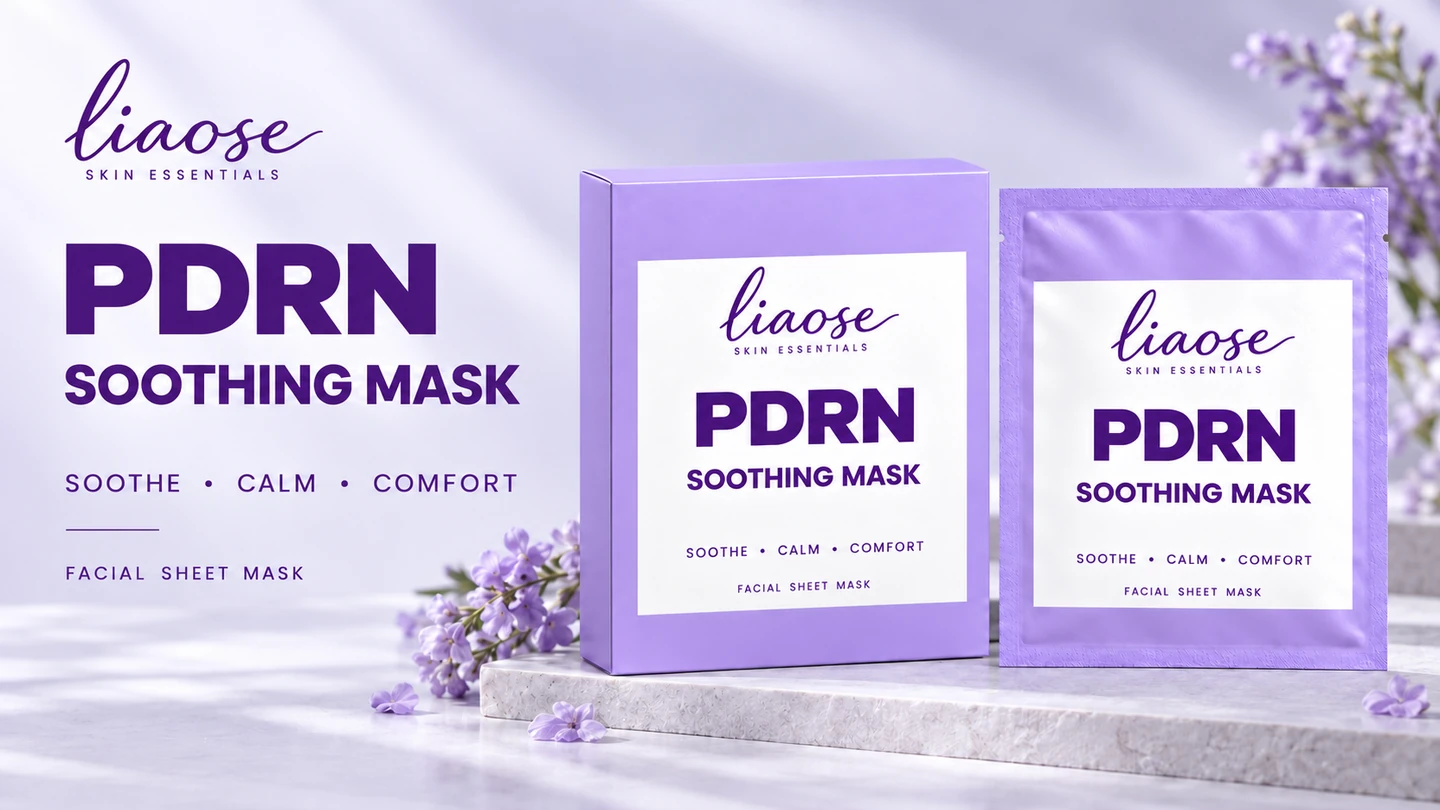
Soothing direction
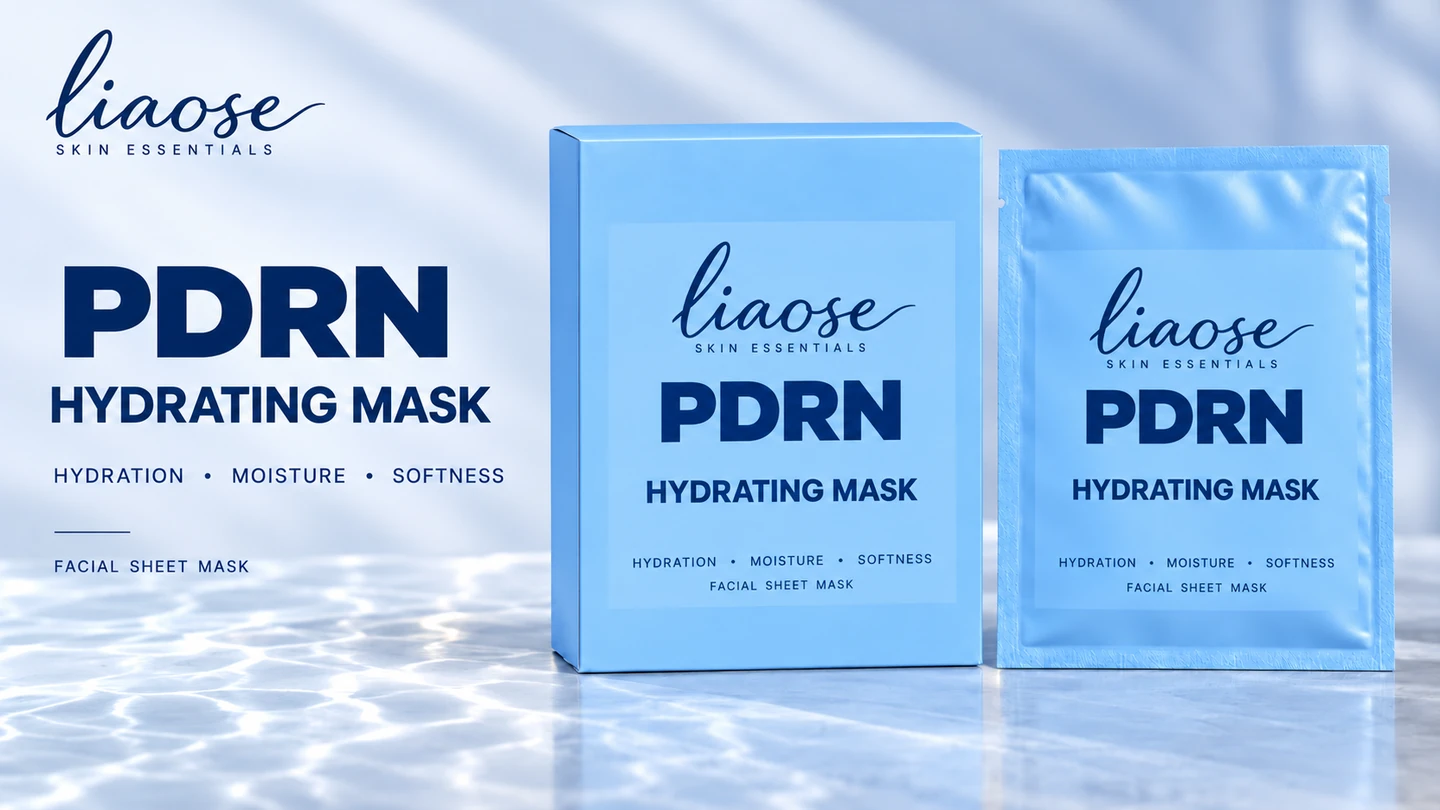
Hydrating direction
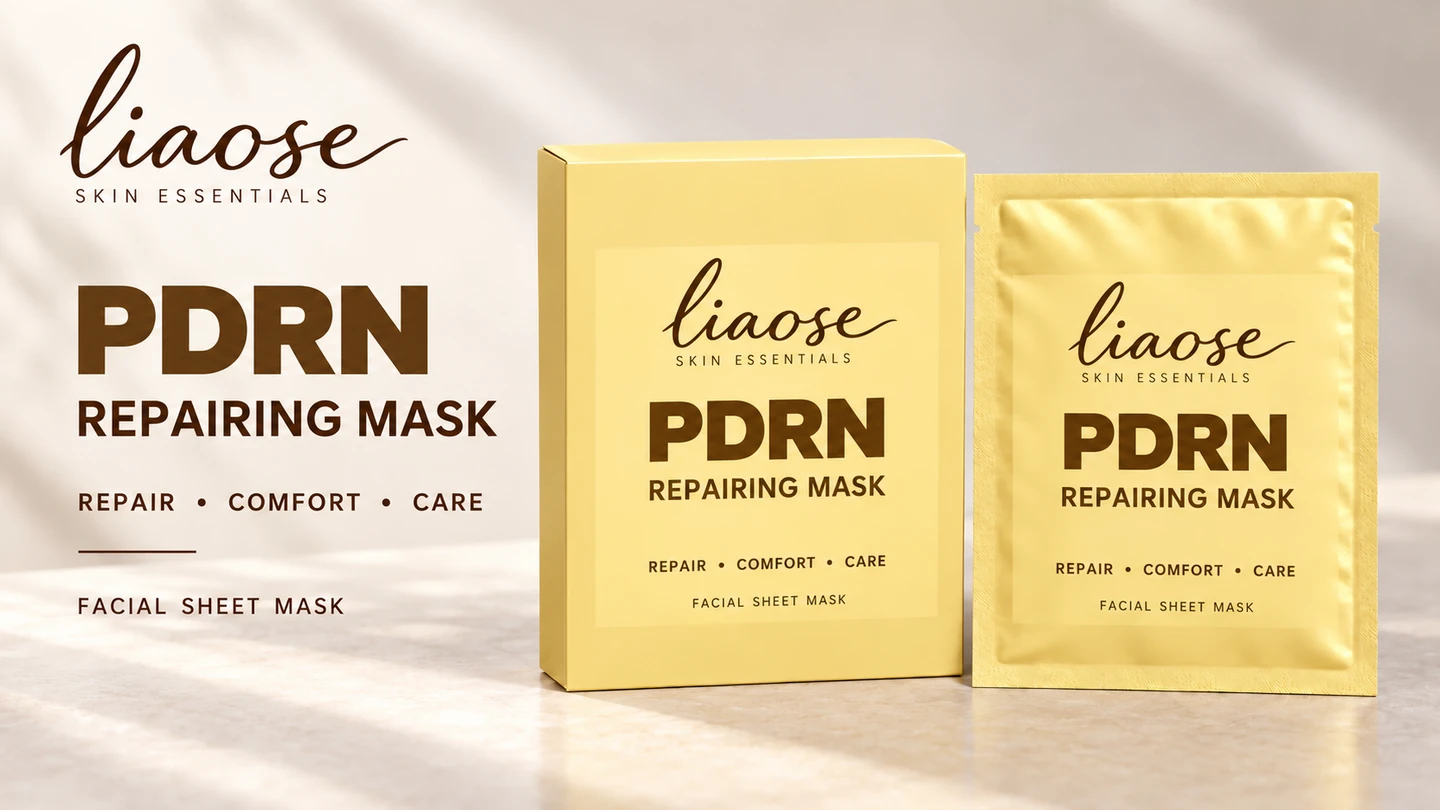
Repairing direction
Customer-supplied product visual references. Formula, claims, materials, packaging and availability are subject to project review.
LIAOSE
Product designs
PDRN Soothing Mask
Discuss this product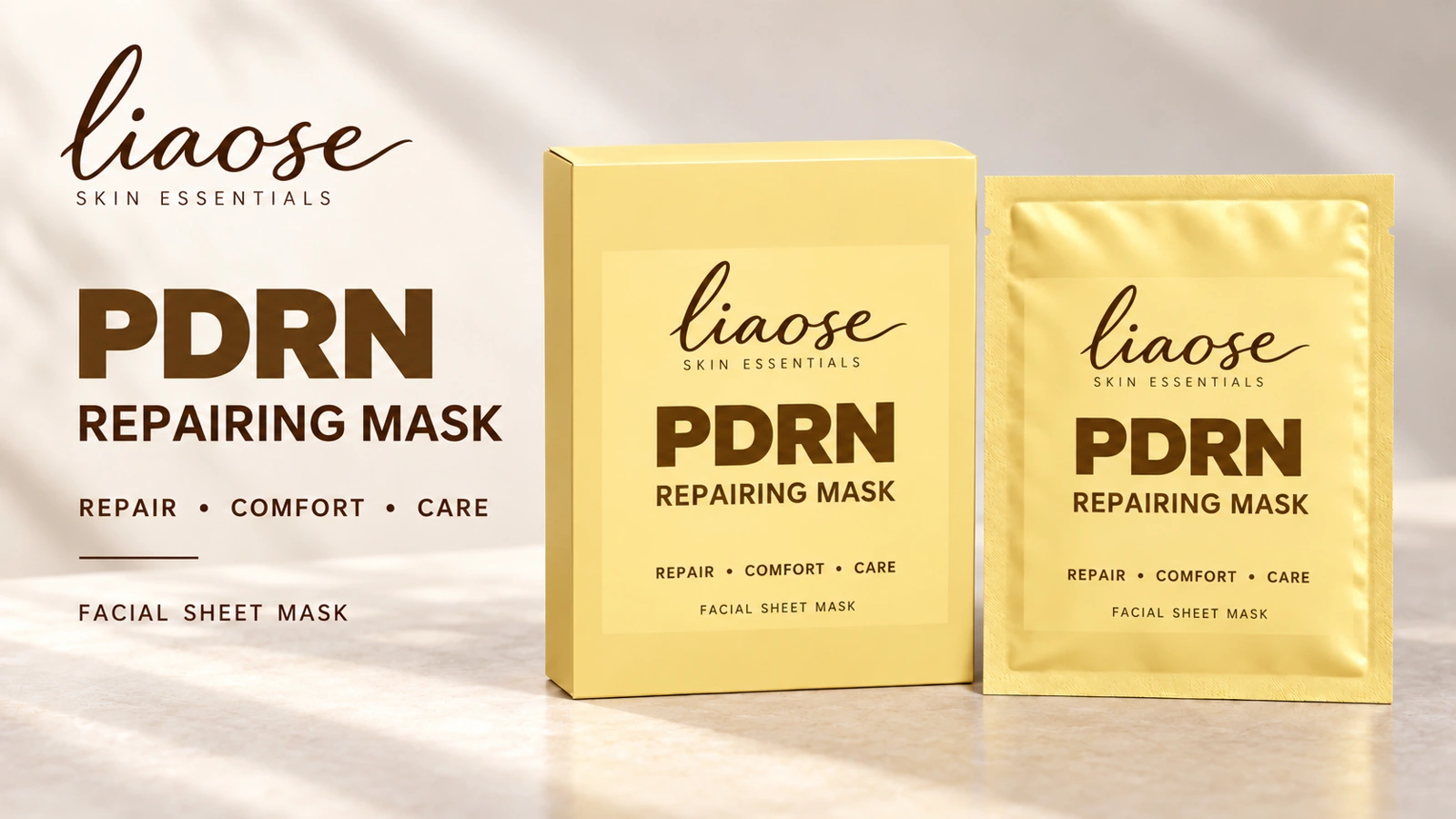
PDRN Repairing Mask
Discuss this productProduct formats
Choose the format.
Shape the experience.
Choose the kind of mask project first, then compare the physical formats within it. These groups organize the brief; they do not make the paired formats interchangeable.
Full-Face Mask Projects
A full-face brief still needs a clear format choice: sheet-based or the separately named Water + Oil direction.
Facial Sheet Mask
Discuss this formatFormat & development notes
Develop a sheet-format project around the intended application and formulation reference. Discuss the sheet and liquid system together, with a sealed pouch and presentation reference.
Bring the carrier and handling priorities into the brief. Sheet material, fiber, weight and absorption specifications must be established through project review.
Water + Oil Mask
Discuss this formatFormat & development notes
Keep Water + Oil as its own full-face development reference. Discuss the oil-related ingredient priorities and the proposed pouch or carton presentation separately from a conventional Sheet brief.
Clarify the composition, carrier and application with development. The format name alone does not define a phase mechanism, activation method or final material specification.
Spreadable & Peel-Off Projects
Compare a peel-off application with a clay-based spreadable mask, keeping texture, removal and packaging questions separate.
Peel-Off Mask
Discuss this formatFormat & development notes
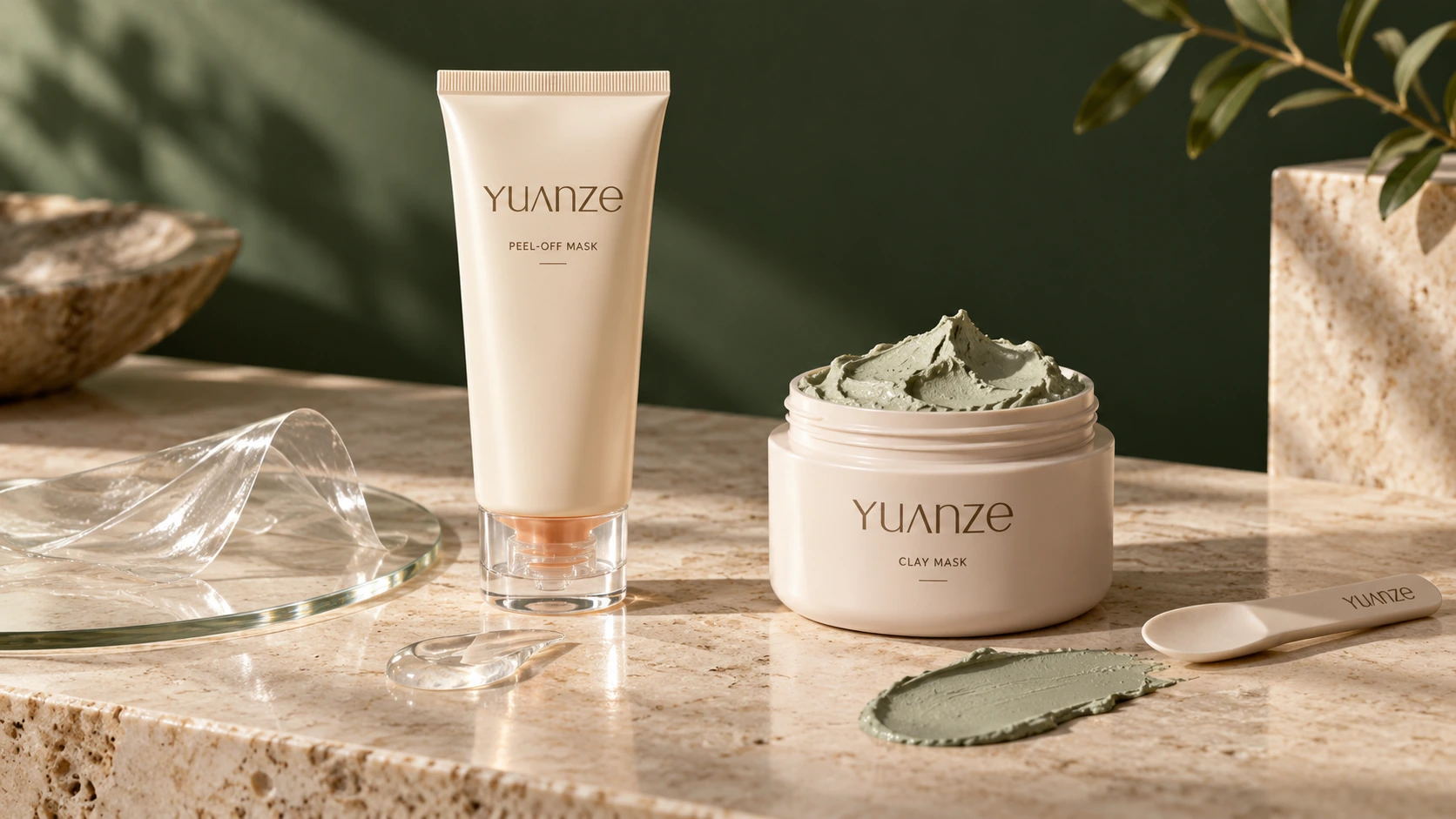
A distinct peel-off format, shown with tube and application references. Bring the proposed spread, texture and removal benchmark into formulation and sample discussion.
Review opening, dispensing and application guidance with the selected sample. A peel-off brief is not a generic gel, nor evidence of pore extraction or instant performance.
Clay Mask
Discuss this formatFormat & development notes
Develop the clay-based mask texture and application around a jar or proposed containment reference. Discuss pickup, spread and the sample experience you want to achieve.
Define removal guidance and packaging with the actual formula. Clay Mask belongs to this Mask family; a cleansing project is a separate conversation.
Targeted-Area Projects
Eye and Lip are different application areas, each requiring its own format, use and sensitive-area review.
Eye Mask
Discuss this formatFormat & development notes
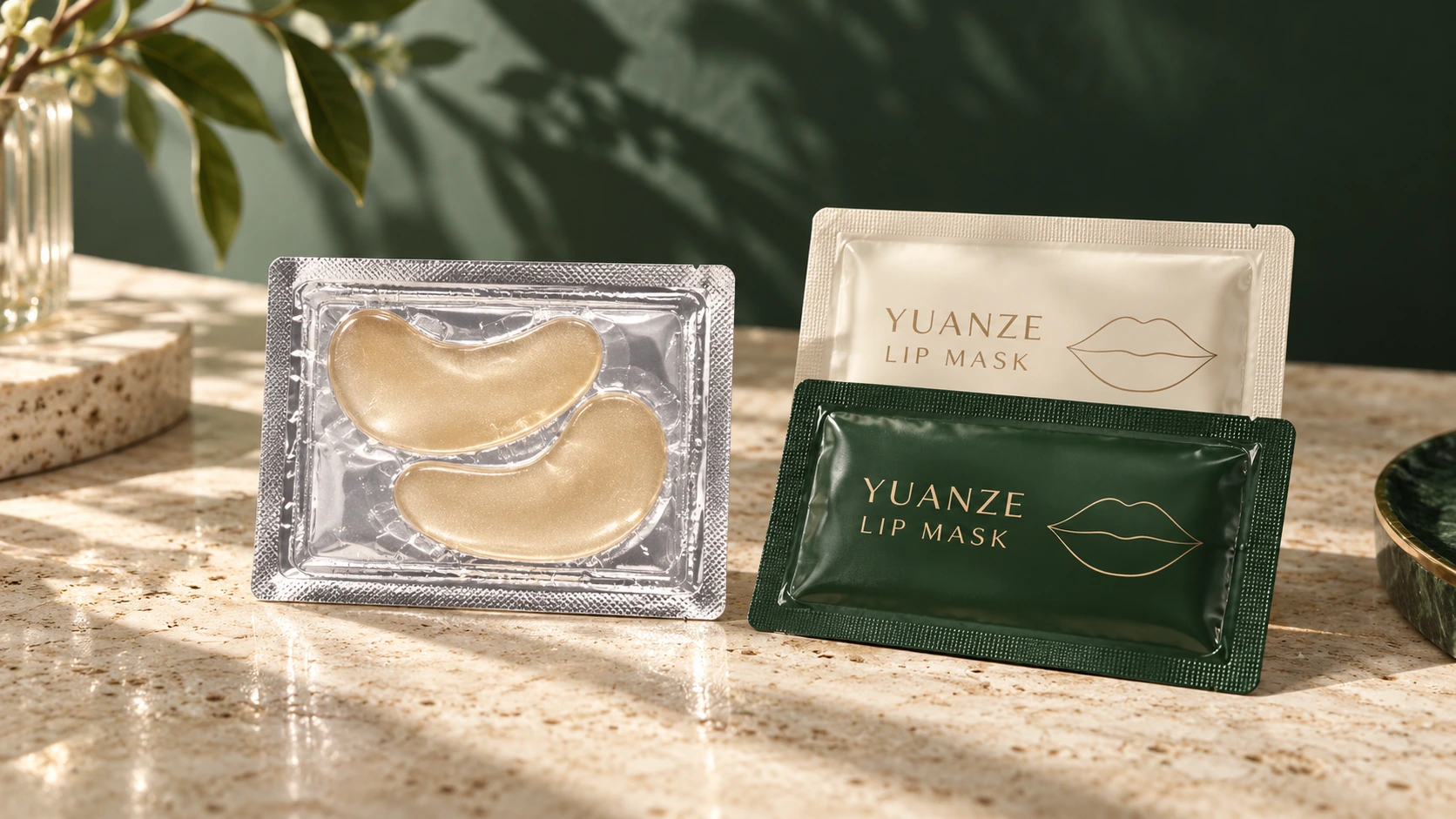
Start with an eye-area mask brief. Compare patch and pack presentation with the intended application and ingredient priorities, keeping it separate from a full-face sheet project.
Define the contact area, use guidance and proposed wording for sensitive-area review. Do not assume dark-circle, puffiness or wrinkle outcomes from the format.
Lip Mask
Discuss this formatFormat & development notes
Define a lip-specific mask project with its own application and sealed-pack presentation. Bring the desired format and texture benchmark rather than treating it as an Eye Mask or lip-care balm.
Review the exact material, contact and instructions for the proposed lip-area application. Sensitive-area suitability and stronger repair or treatment wording need separate assessment.
For routine cleansing or makeup removal, continue to Facial Cleanser. Keep clay-mask development here rather than adding it as another cleanser format.
Formula & texture
Choose the direction.
Keep the format distinct.
Start with the intended cosmetic development conversation.
Hydration
Frame the desired moisturizing experience and application, then choose the physical mask format.
Brightening
Define brightening as a cosmetic development direction, with the intended market and public wording clearly stated.
Age-support
Discuss an age-support cosmetic project through its application, sample reference and ingredient priorities.
Comfort & conditioning
Start a comfort and conditioning conversation around the mask experience you want to develop.
Smoothing
Use smoothing as a Peel-Off development conversation, not a promise of instant removal or pore extraction.
More ingredient & format references
Facial Sheet Mask
Sheet-format ingredient references
Collagen · Hyaluronate Acid · Glycerin · Xylitol · Niacinamide · Arbutin · Vitamin C · Tranexamic Acid · Glycyrrhiza Glabra · Retinol · Peptides · Ceramide · Bisabolol · Centella Asiatica Extract (CICA) · Panthenol (B5)
Peel-Off Mask
Peel-off ingredient references
Collagen · Hyaluronate Acid · Glycerin · Xylitol · Niacinamide · Arbutin · Vitamin C · Tranexamic Acid · Glycyrrhiza Glabra · Retinol · Peptides · Ceramide · Bisabolol · Centella Asiatica Extract (CICA) · Panthenol (B5)
Clay Mask
Clay-based texture and ingredient references
Amazonian White Clay · Charcoal · Green Clay · Volcanic Ash · Bisabolol · Niacinamide · Arbutin · Vitamin C · Turmeric · Aloe Vera Extract · Coconut Oil
Eye Mask
Eye-area ingredient references
Sodium Hyaluronate · Collagen · Caffeine · Niacinamide · Peptides
Lip Mask
Lip-area ingredient references
Hyaluronate Acid · Collagen · Glycerin · Niacinamide
Water + Oil Mask
Oil-related and formulation references
Olive oil · Argan Oil · Collagen · Hyaluronate Acid · Glycerin · Xylitol · Retinol · Peptides · Ceramide · Bisabolol · Centella Asiatica Extract (CICA) · Panthenol (B5)
These are separate development references, not finished formulas. Ingredient identity, composition, concentration, carrier material, suitability and product wording need review for the selected format and market.
Packaging & presentation
Let the presentation
follow the product.
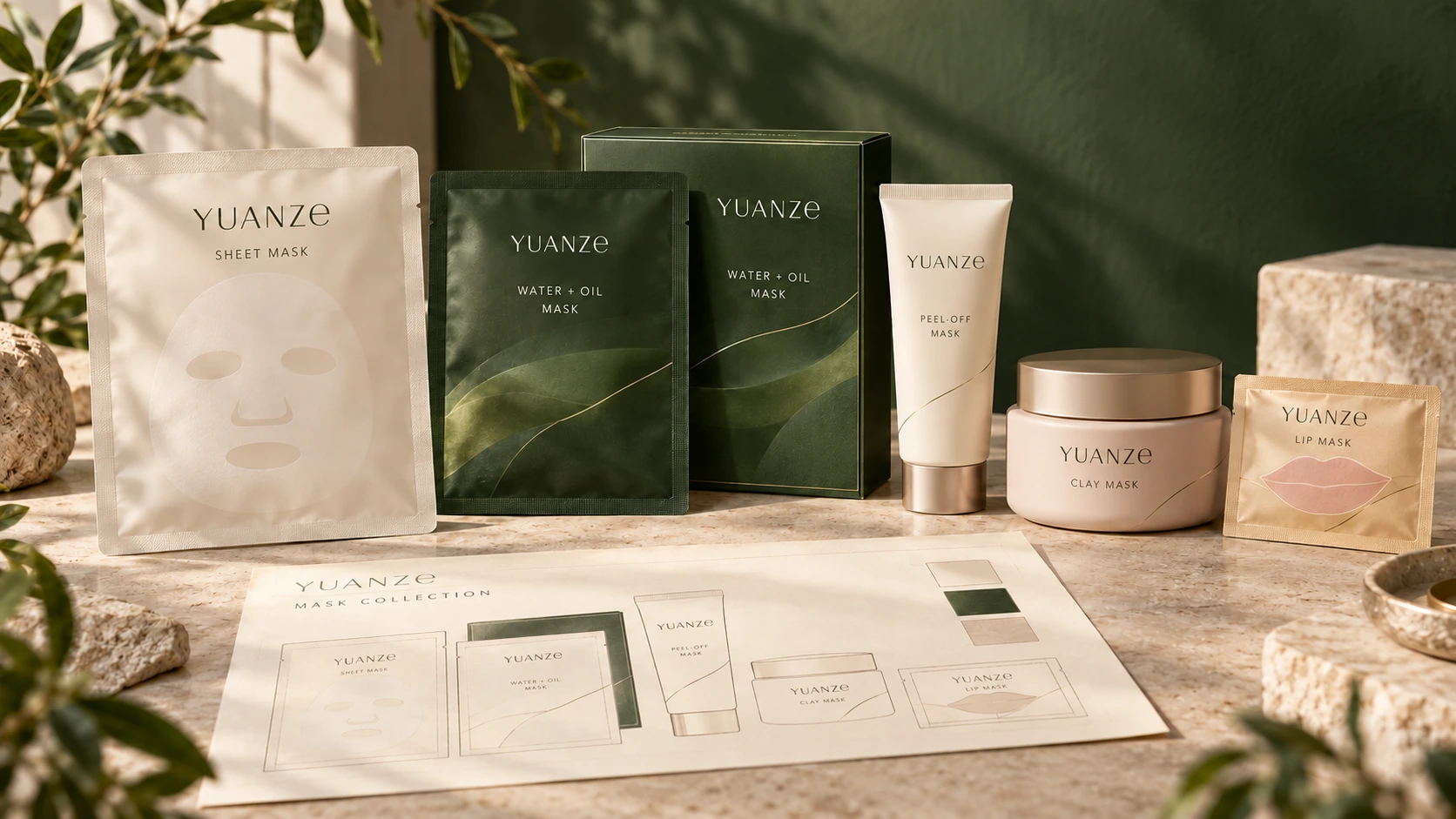
Packaging is a format decision, not a universal mask container. Compare sealed pouch and presentation references for Sheet or Water + Oil, tube dispensing for Peel-Off, jar access for Clay, and the distinct Eye or Lip pack.
Format · dispensing · compatibility · brand presentation
Explore PackagingCustomization
Your references.
A considered brief.
Bring the product role, sample texture and presentation together for development review.
Development direction
State the intended cosmetic direction and ingredient priorities. Choose the physical mask format separately, then bring a sample or benchmark into discussion.
Mask format & texture
Choose Sheet, Peel-Off, Clay, Eye, Lip or Water + Oil. Describe the carrier, texture and handling you want to discuss; material specifications are agreed for the project.
Application & target area
Specify full-face, eye-area or lip-area use and the application reference. Keep targeted formats distinct and identify instructions or wording that require sensitive-area review.
Packaging & presentation
Bring the relevant pouch, sealed tray, tube, jar or carton reference. Align containment, access, decoration and presentation with formulation and sample review.
Production path & starting inputs
Explain whether you have a concept, formula or benchmark sample. Share the market, quality questions, estimated quantity and intended timing, then agree development and production responsibilities.
Product development
From your idea
to production preparation.
Connect the brief, sample and packaging with review and agreed production requirements.
- 01
Brief
Category, market and product priorities.
- 02
Formula
Direction and development review.
- 03
Sample
Application reference and sample feedback.
- 04
Packaging
Component and compatibility review.
- 05
Review
Documentation and approval inputs.
- 06
Production preparation
Approved configuration and quality requirements.
Yuanze proof
Development. Quality.
Manufacturing.
Real Yuanze environments connect the product conversation with the work behind it.
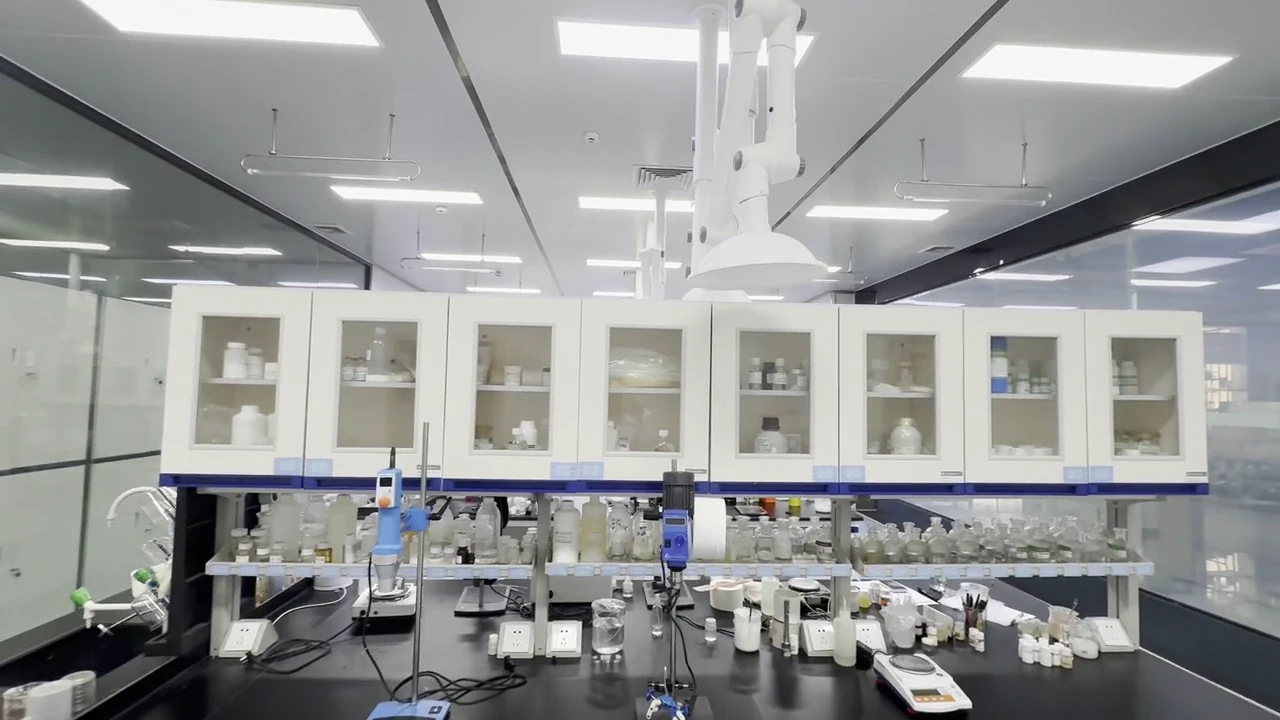
Product Development
Connect formula and application references with sampling and development review.
Explore Product Development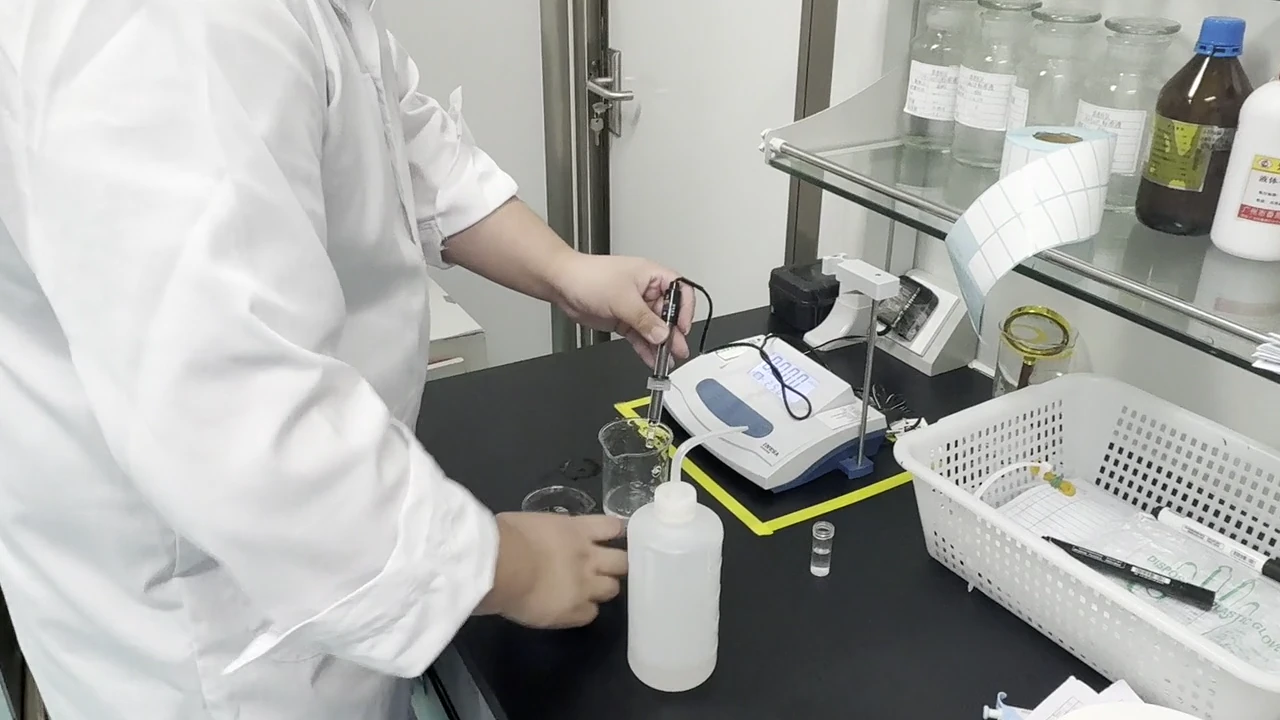
Quality
Connect review to the actual mask formula, carrier, application and pack.
Explore Quality
Manufacturing
Connect the approved mask formula, carrier or component, packaging and documentation before production preparation.
Explore ManufacturingRelated products
Continue the
product conversation.
Project questions
Before
we begin.
Which mask formats can I discuss with Yuanze?
How should I choose between the three project groups?
Does a development direction determine the physical format?
What should I include for an Eye or Lip Mask project?
Can I discuss packaging together with the mask format?
What does Water + Oil mean for the brief?
How does quality review connect to manufacturing?
Can I discuss OEM, ODM or OBM responsibilities?
What should I prepare for a Mask brief?
Your next product
Bring the brief.
We'll map the evidence.
Share the format, market, texture and packaging references you want to develop.