Start with the wet sample, not a material ranking
A dry sheet gives only part of the picture. Evaluate candidate substrates with the proposed serum, cut and fill quantity. Observe unfolding, wet handling, coverage and fit. Include any support layer in the comparison, since it is part of the opening and application routine.
Request the composition and construction behind a broad material description. Cotton-containing nonwovens, lyocell-containing constructions and bio-cellulose references should be discussed as specific supplied materials, not placed in a universal quality ranking.
A clear record names the substrate reference, cut, serum version and quantity used in the sample. If any of those changes, the earlier observation may no longer describe the proposed finished mask. Material claims also need supporting supplier information for the actual material selected.
| Component | Record |
|---|---|
| Sheet | Composition, construction, cut and any support layer. |
| Serum | Formula reference, sensory direction and intended quantity. |
| Pouch | Material construction, dimensions, opening and marking areas. |
Make the pouch a component decision before an artwork decision
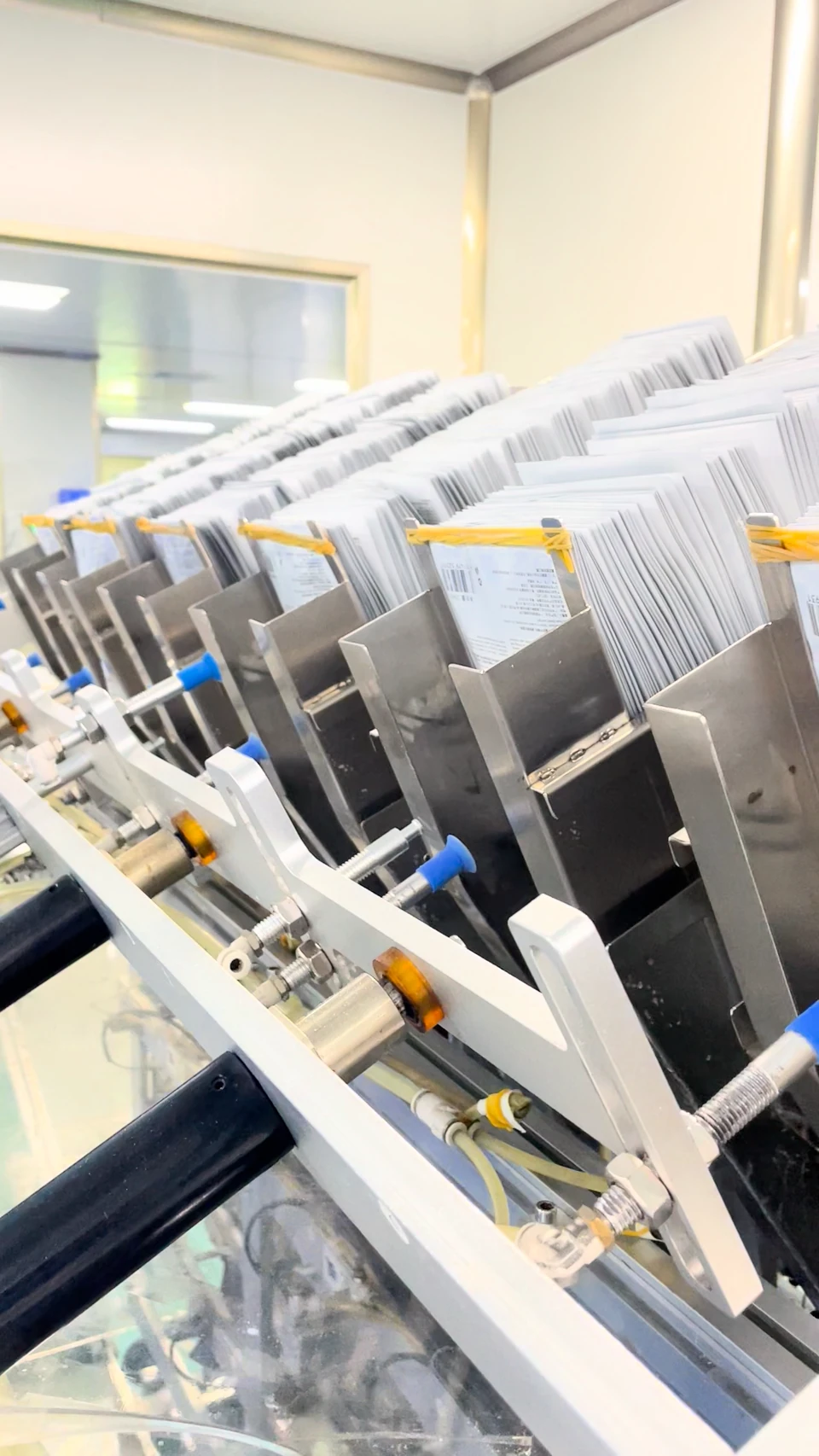
The feed-rack photograph makes one point concrete: the sachet is handled by equipment as well as by the customer. Its dimensions and construction therefore belong in the product specification. The image itself does not establish machine settings or the material used.
Define the pouch dimensions, sealing area, opening feature and batch-marking position with the component supplier and manufacturer. Then evaluate a filled sample, including how the folded mask sits inside and how the sachet fits into the intended carton.
Keep the approved artwork linked to the approved component reference. If the pouch dimensions or material changes, identify what needs to be checked again. A visually similar pouch should not be assumed to be an interchangeable production component.
Connect the approved sample to the manufacturing process
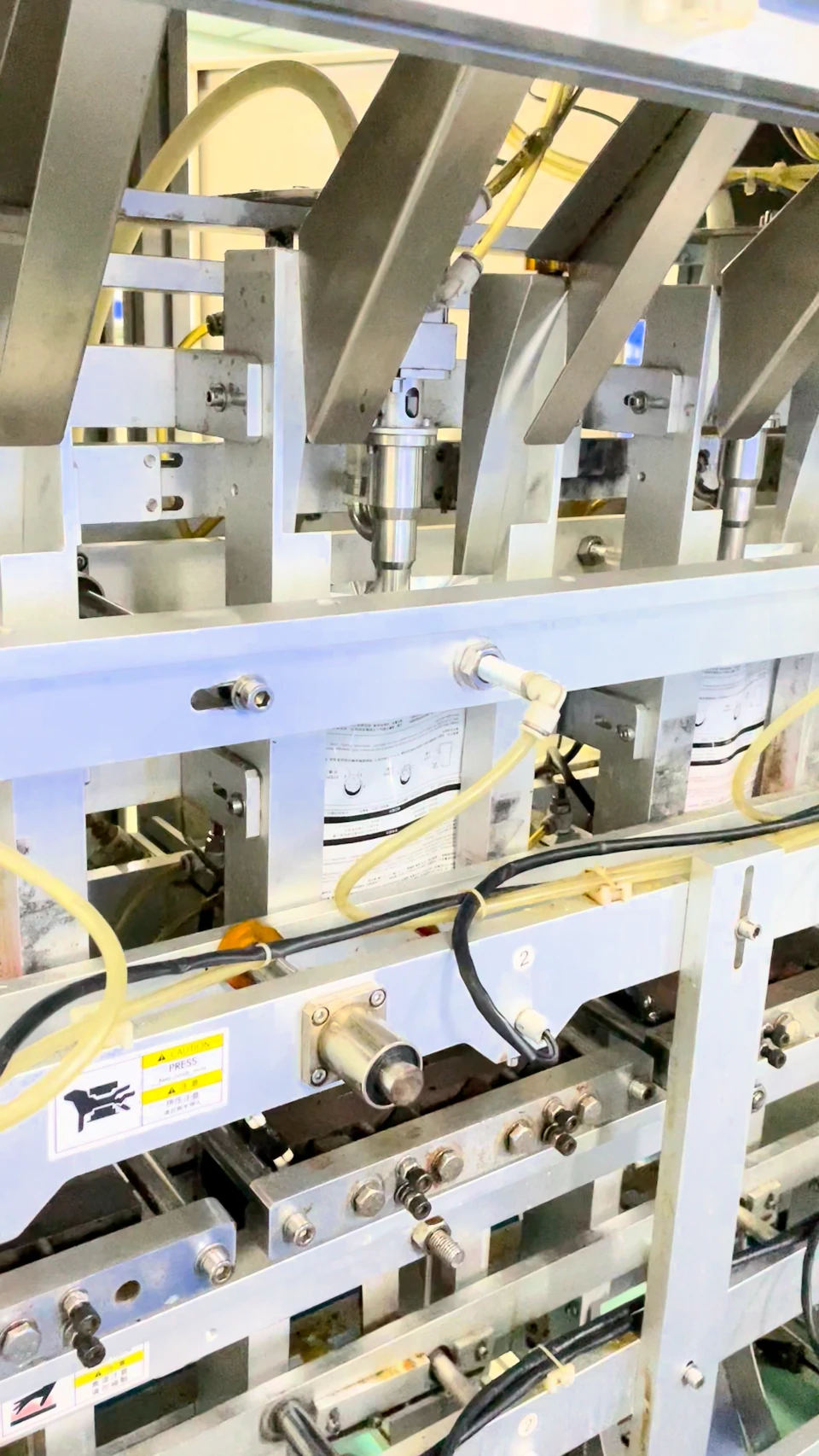
A useful sheet mask manufacturing process discussion follows the product through component and bulk readiness, sheet and serum preparation, pouch loading and dosing, sealing and identification, then inspection and packing. The exact sequence and responsibilities depend on the proposed configuration.
Use that sequence to locate the decisions: where the first-piece review takes place, how the agreed fill quantity is checked, and how batch identification continues into the outer pack. Keep the checks and acceptance criteria in the agreed project plan.
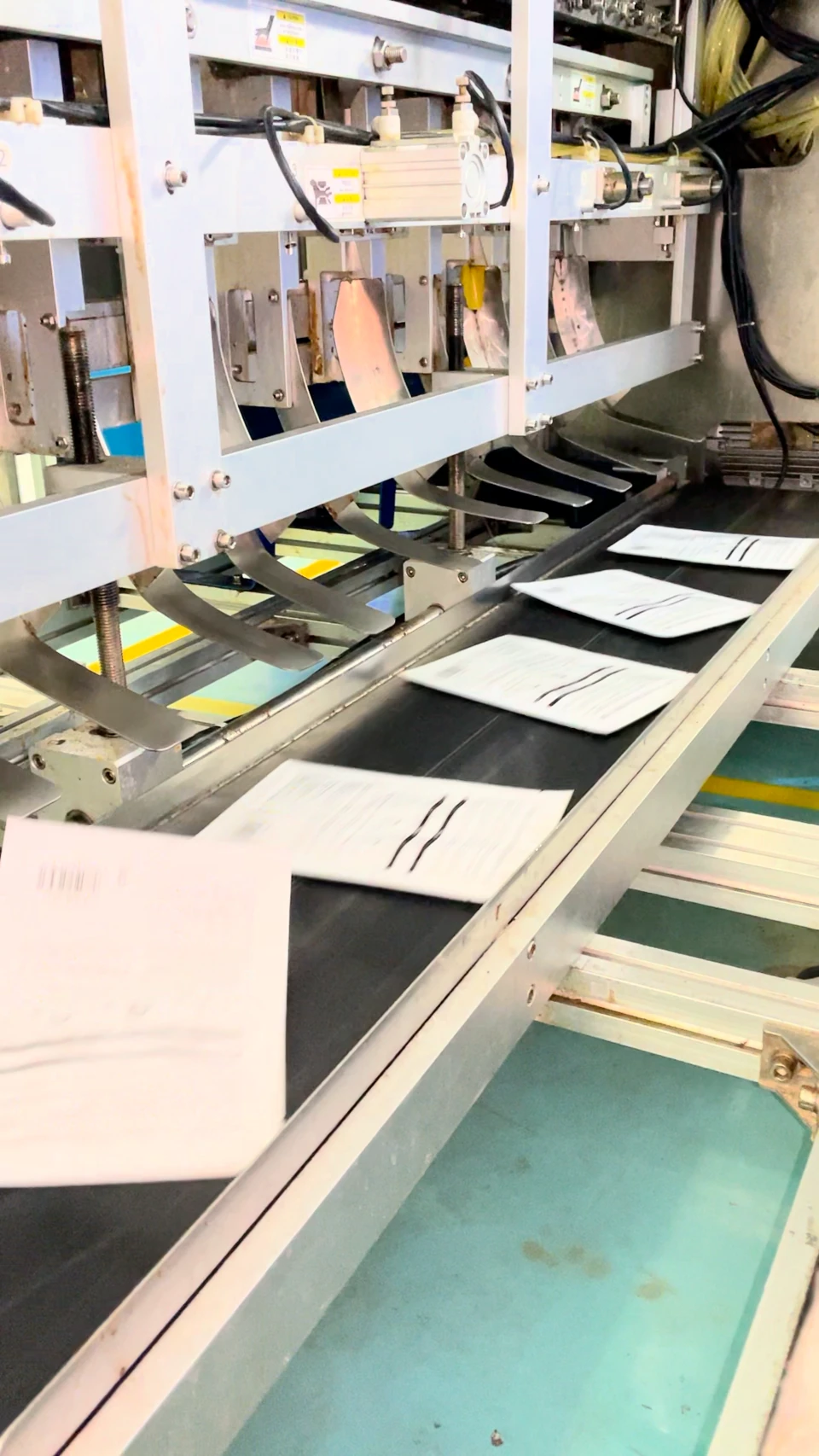
The conveyor image follows the pouches into another handling step. Carry the agreed product and batch references through to the packing record, so the outer pack remains connected to the approved configuration. For the broader workflow, continue to the manufacturing overview and quality-control overview.
- Component and bulk readiness
- Sheet and serum preparation
- Pouch loading and dosing
- Sealing and identification
- Inspection and packing
Compare one complete sheet-mask specification
Give each supplier the same substrate and cut, serum direction and intended quantity, sachet construction, artwork variants, retail carton and order quantities. Differences then become visible instead of being hidden behind a headline unit price.
Separate development, component preparation and production in the quotation. List the sample and technical review work included, the minimum quantities by product or printed version, and the approvals needed before a schedule can be confirmed.
A new formula, sheet or pack may change the review plan. Keep those dependencies visible in the manufacturing lead-time guide and the project’s own approval record. The aim is a repeatable specification, rather than a collection of independently attractive parts.
A concise sheet mask manufacturing brief
Use these points to organise the first supplier discussion.
- Target market, intended wearing experience and retail format.
- Substrate reference, cut, support layer and proposed serum.
- Intended fill quantity and complete pouch specification.
- Quantities by artwork, carton format and required sampling and review work.
Buyer questions
Which sheet mask material should a new brand choose?
Compare documented candidates with the intended serum, cut, positioning and budget. Use wet handling and fit to guide the decision rather than choosing from a material name alone.
How much serum should a sachet contain?
Establish the quantity with the proposed sheet and pouch, then record the agreed target and production tolerance. A generic quantity would not describe every mask configuration.
What should a sheet mask manufacturing quotation include?
The substrate and cut, serum reference and intended quantity, pouch construction and print, retail and outer packing, quantities by variant, and the development and review work included. List any substitutions explicitly.
Bring the complete mask concept to the first discussion
Share the intended market, sheet and serum direction, pouch concept and quantities with YUANZE to scope the product and sampling questions.
Explore sheet mask development