Bottle · Jar · Tube · Frosted Glass
PACKAGING · MATERIAL · PRESENTATION
Packaging that
completes
the product.
From the container to the final presentation, explore packaging directions around your formula, product experience and brand.
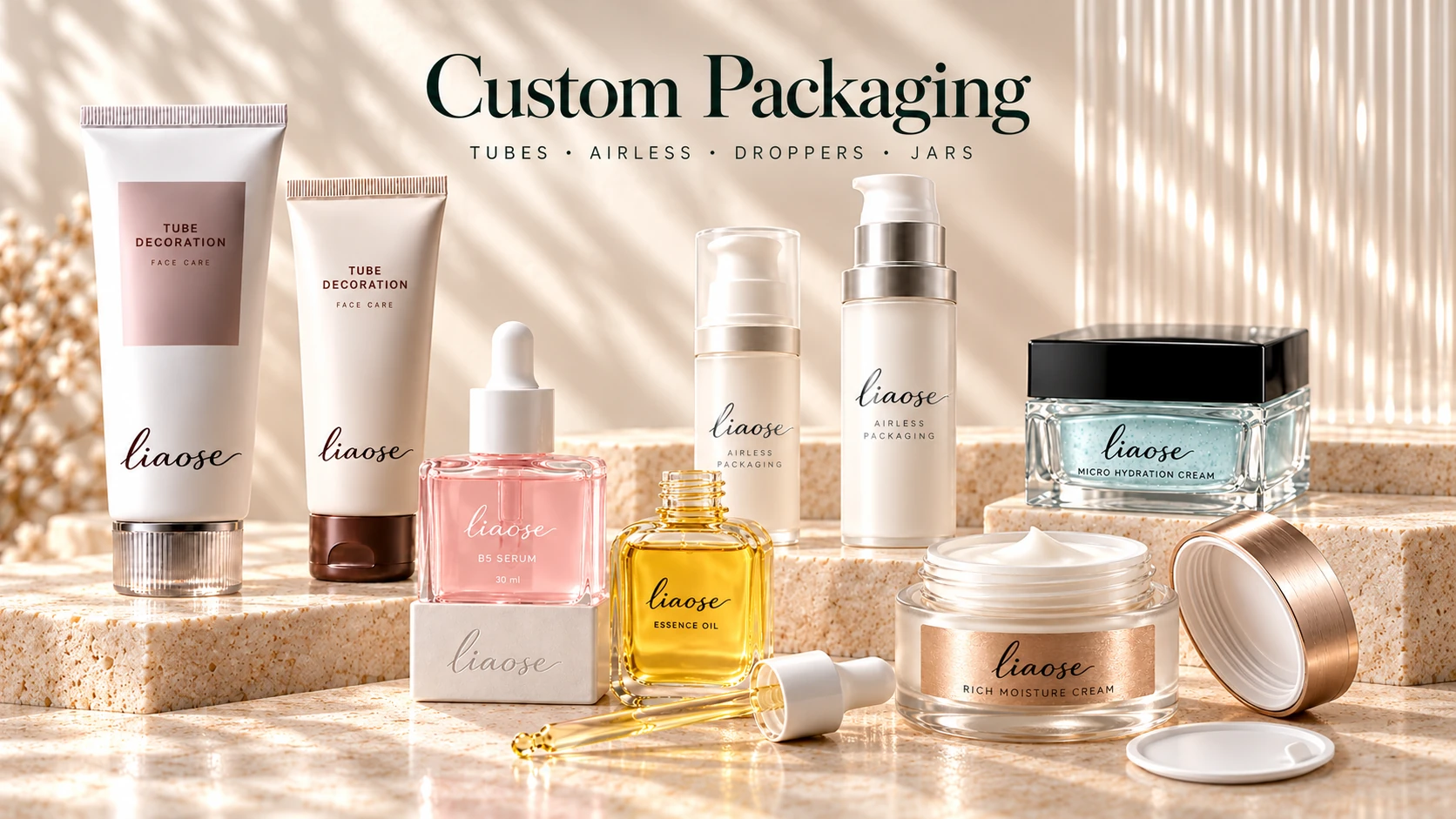
01 / FORM & FUNCTION
Start with the format.
Shape the experience.
Review the container, dispensing system and closure together. Each direction follows the formulation and intended use.
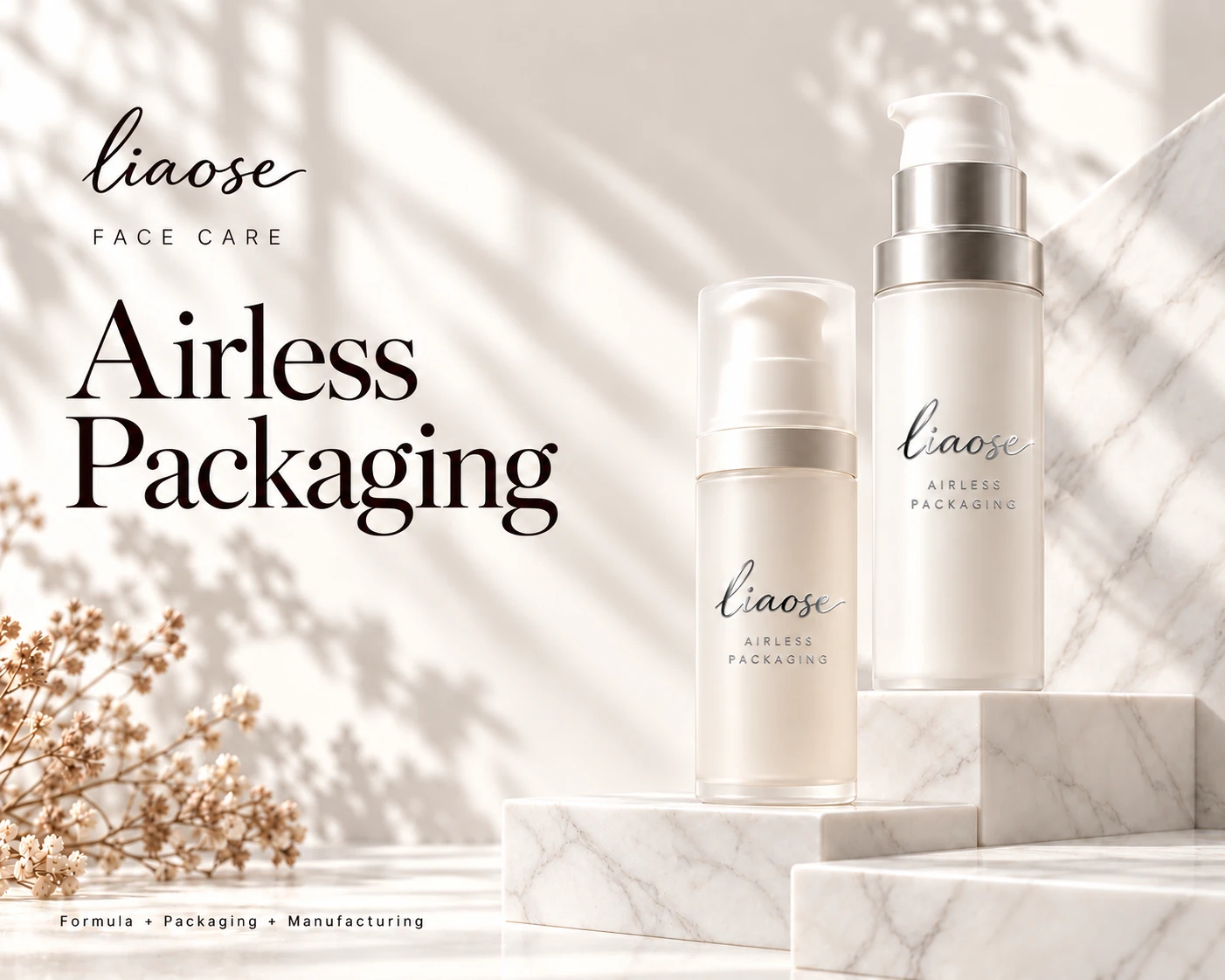
Pump & Airless
Review pump output, vessel construction and formula compatibility together.
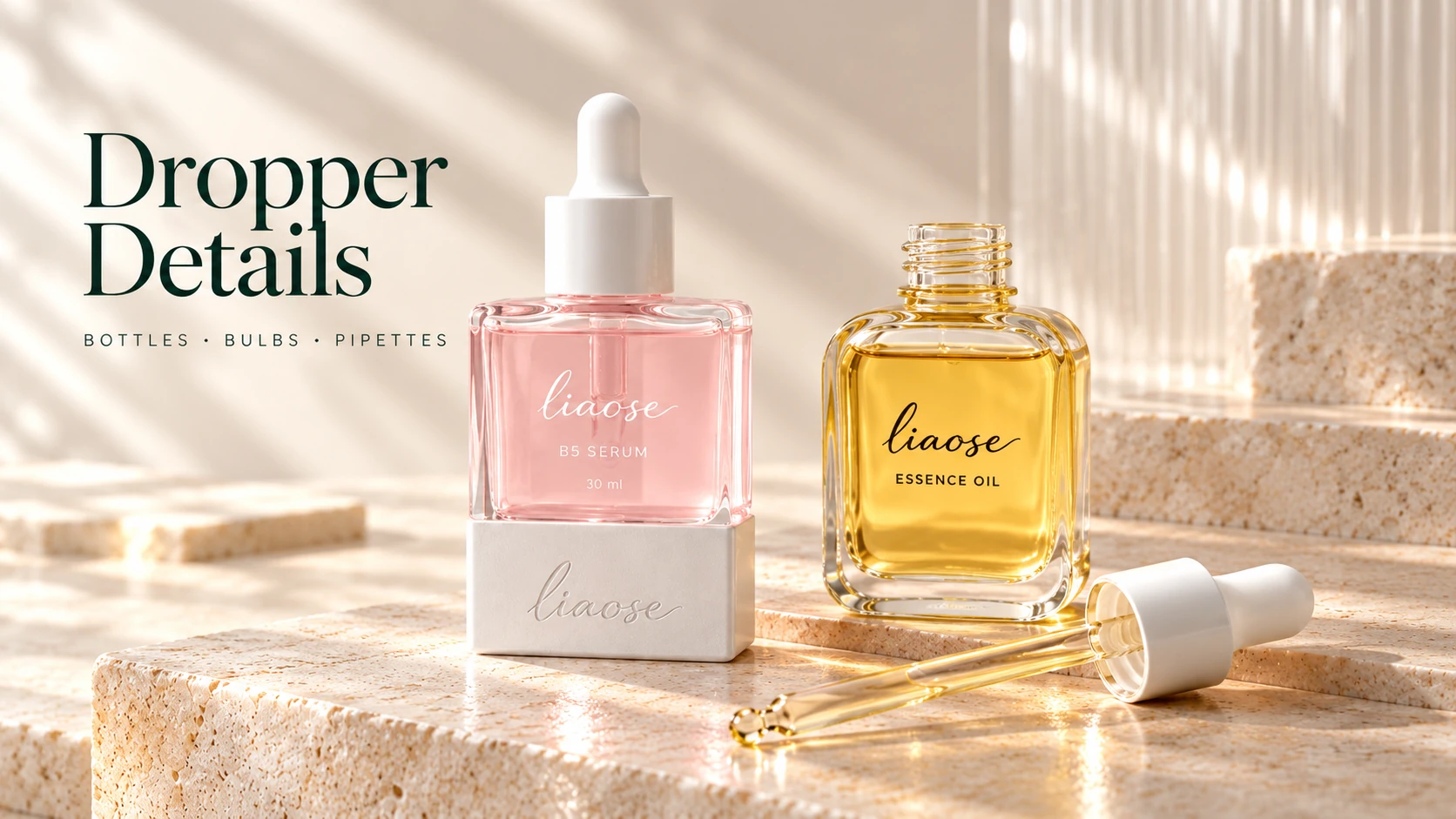
Dropper systems
Targeted liquid application. Bulb, pipette and formulation influence dispensing.
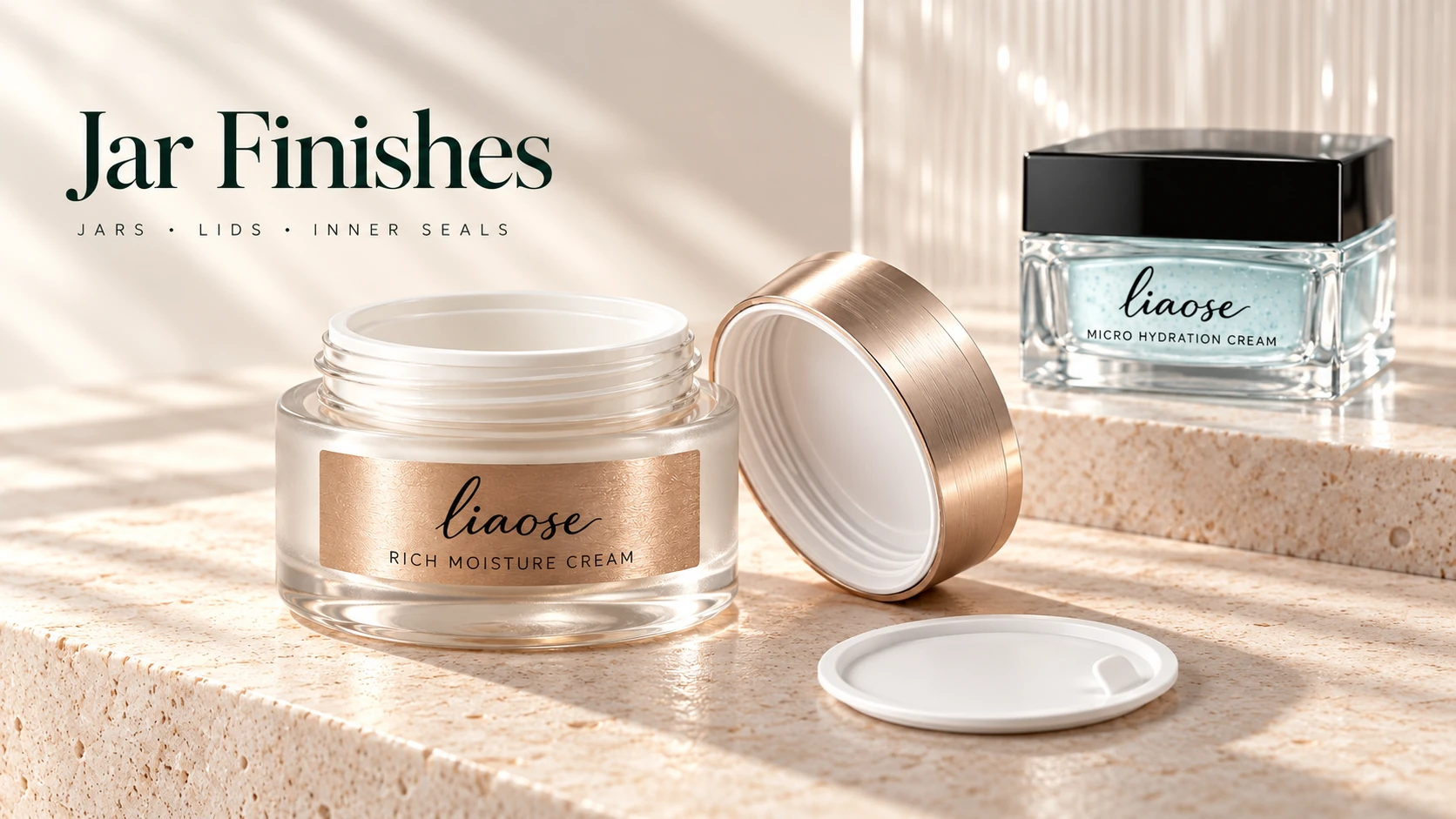
Jars & components
Wide-opening formats. Inner capacity and component materials are reviewed separately.
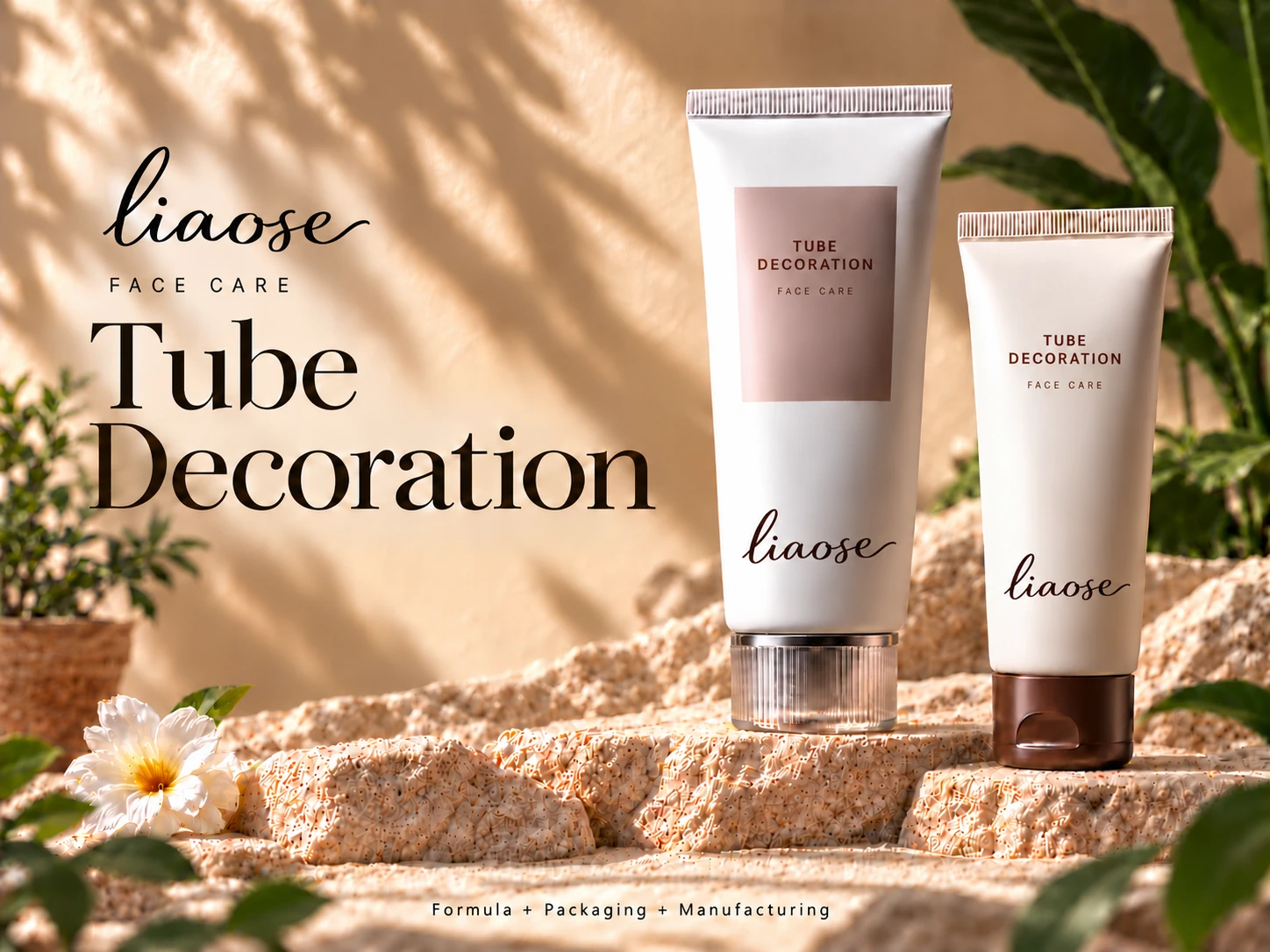
Tube formats
Flexible dispensing with a defined opening, closure and barrier construction.
Review packaging by product series
02 / FACE SERIES
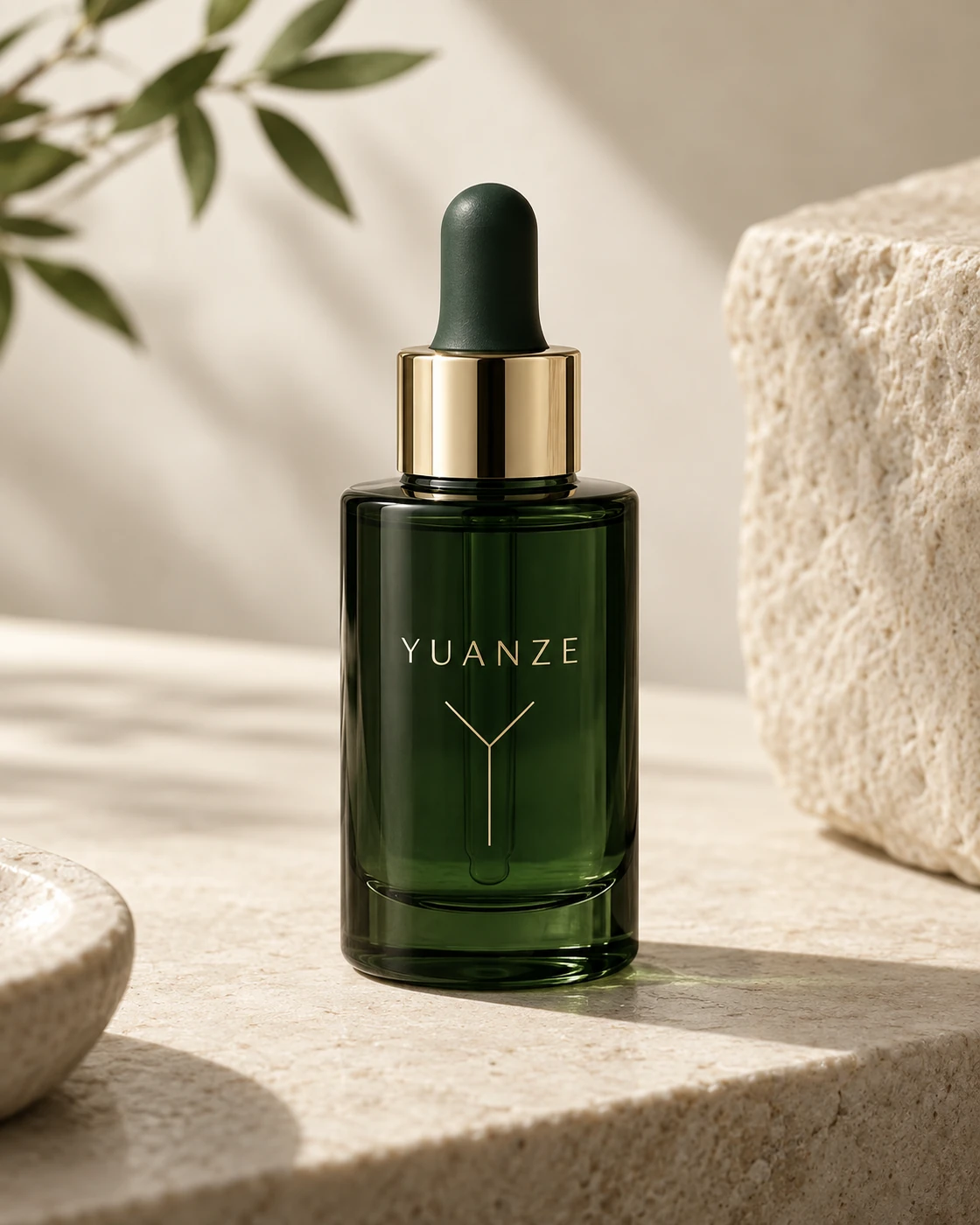
Facial Care Packaging
Explore glass, droppers, jars, pumps, tubes and closures for facial care and beauty development.
Dropper · Pump · Airless-style Format
Caps · Closures
Serum · Cleanser · Toner · Lotion · Cream · Mask · Sunscreen
PRIMARY CONTAINERS
Bottle · Jar · Tube
DISPENSING SYSTEMS
Pump · Dropper
CLOSURES & COMPONENTS
Caps · Inner Lid · Threads · Sealing Components
SECONDARY PACKAGING
Carton · Gift Box · Protective Insert
02 / MATERIAL & SURFACE
See the material.
Understand the finish.
Transparency, surface feel and metallic appearance tell different stories. Material identity and decoration remain separate specifications.
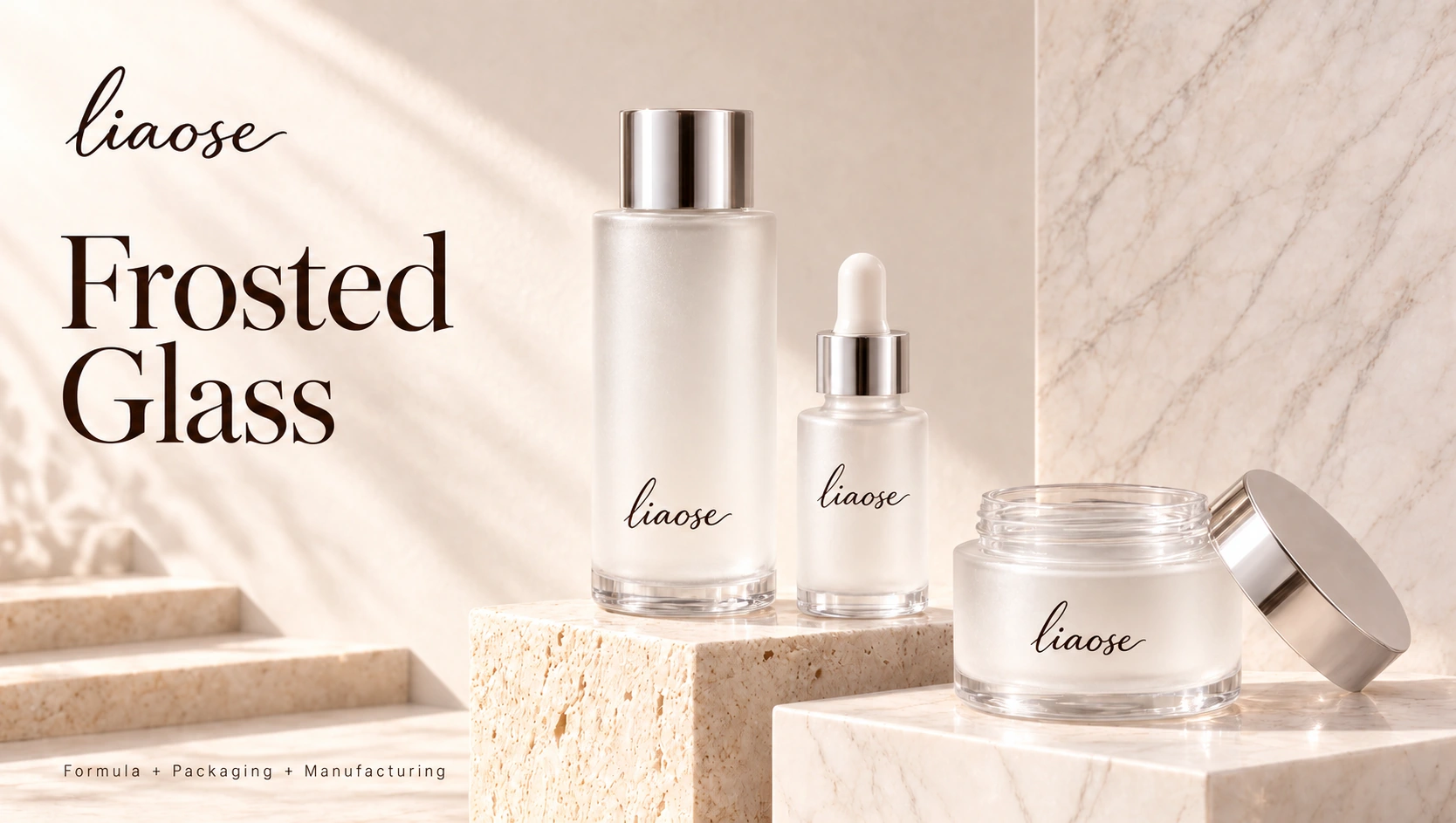
Glass & frosting
A satin appearance may come from glass treatment or a frosted-effect coating.
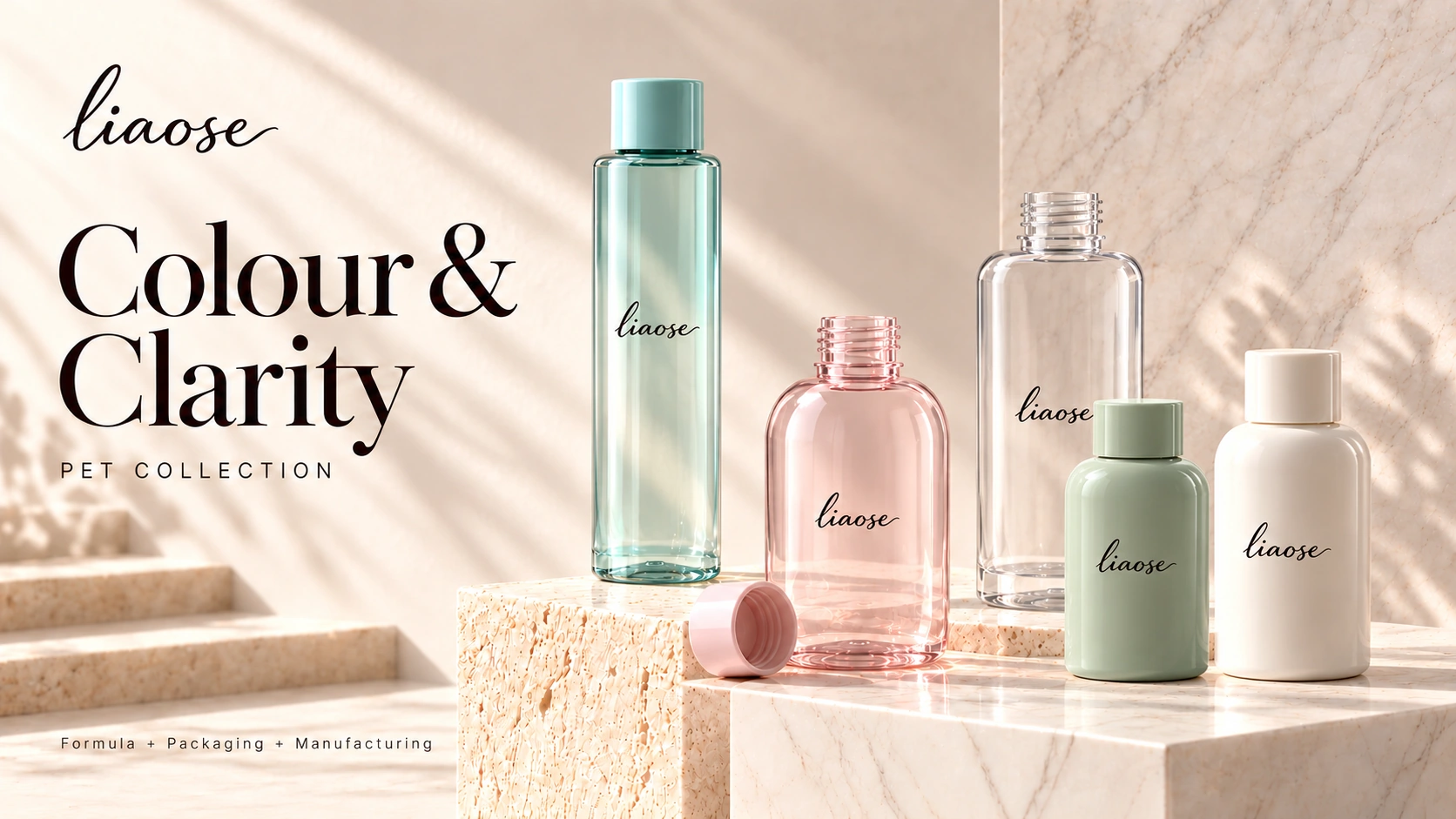
PET & colour
Clear, tinted and opaque directions. Resin identity is confirmed independently of colour.
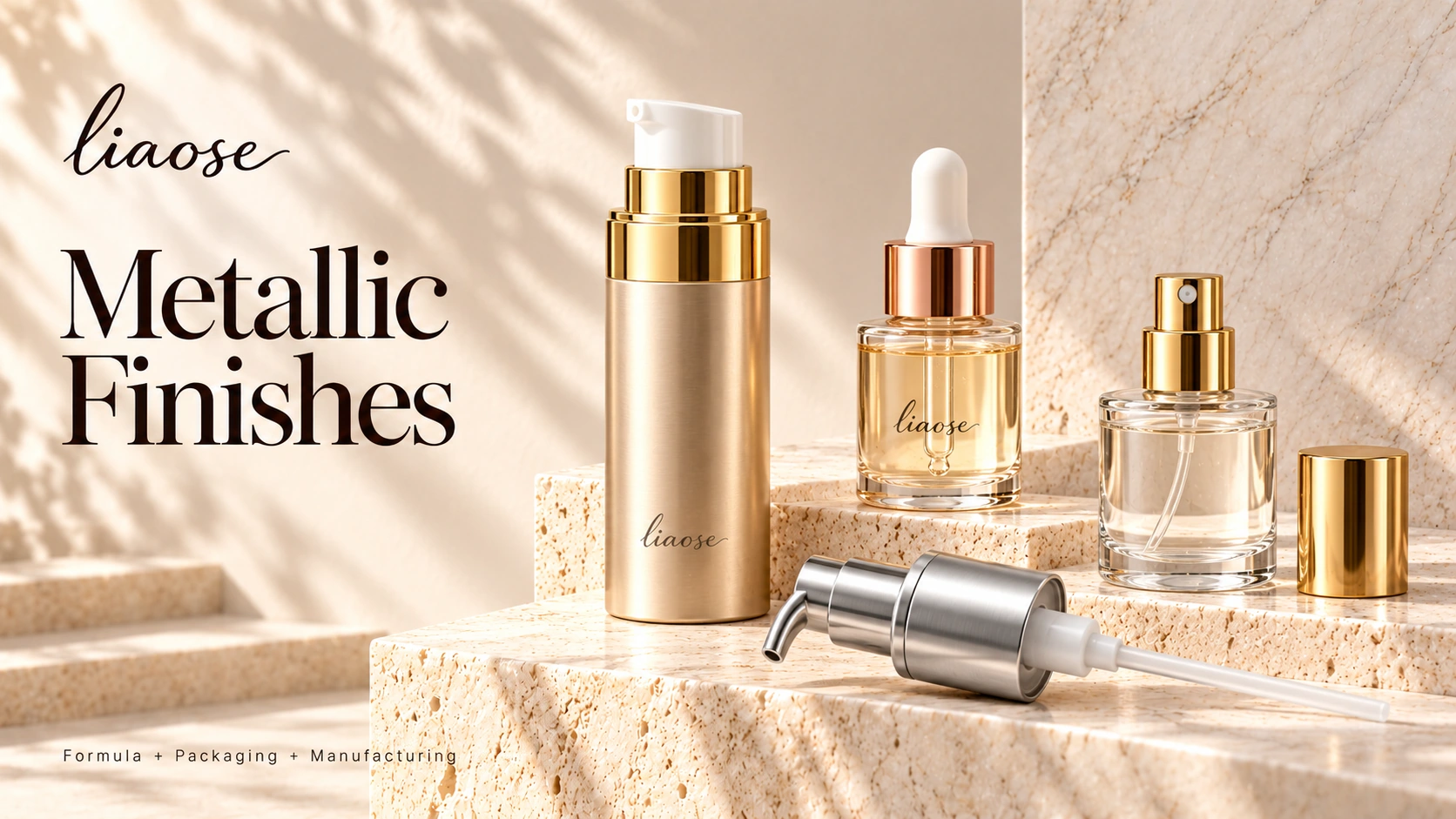
Metallic finishes
Plating, metallisation, coatings and metal shells are distinct approaches.
Visual development references. Materials, processes, formula compatibility and availability are confirmed for each project.
03 / PRINT & EMBELLISHMENT
Details that create
a recognisable identity.
Explore colour, light, texture and relief as separate layers of the packaging design.
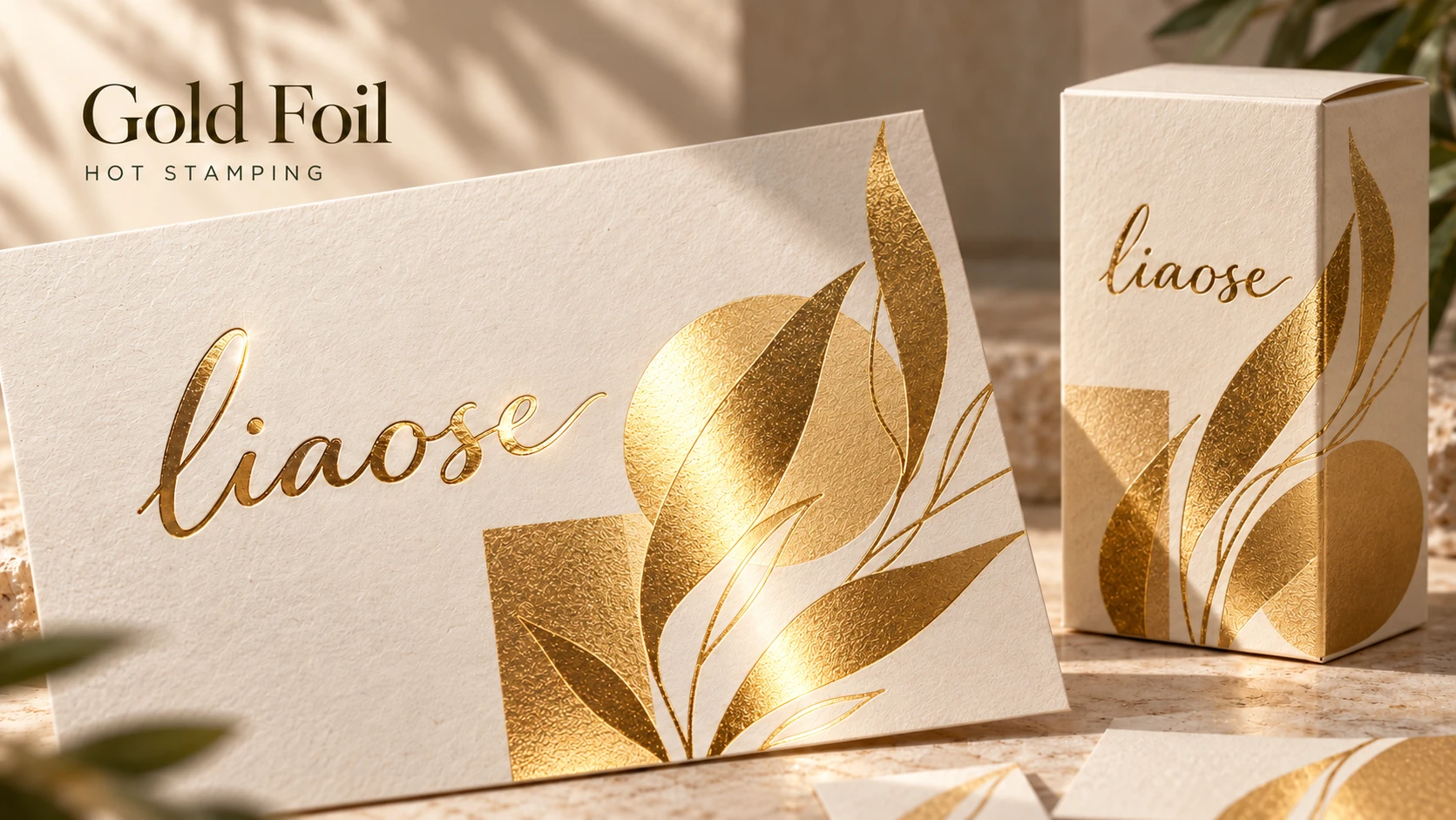
REFLECTIVE DETAIL
Gold hot foil
stamping.
Heat and pressure transfer a decorative layer to selected areas, bringing reflective detail to typography and artwork.
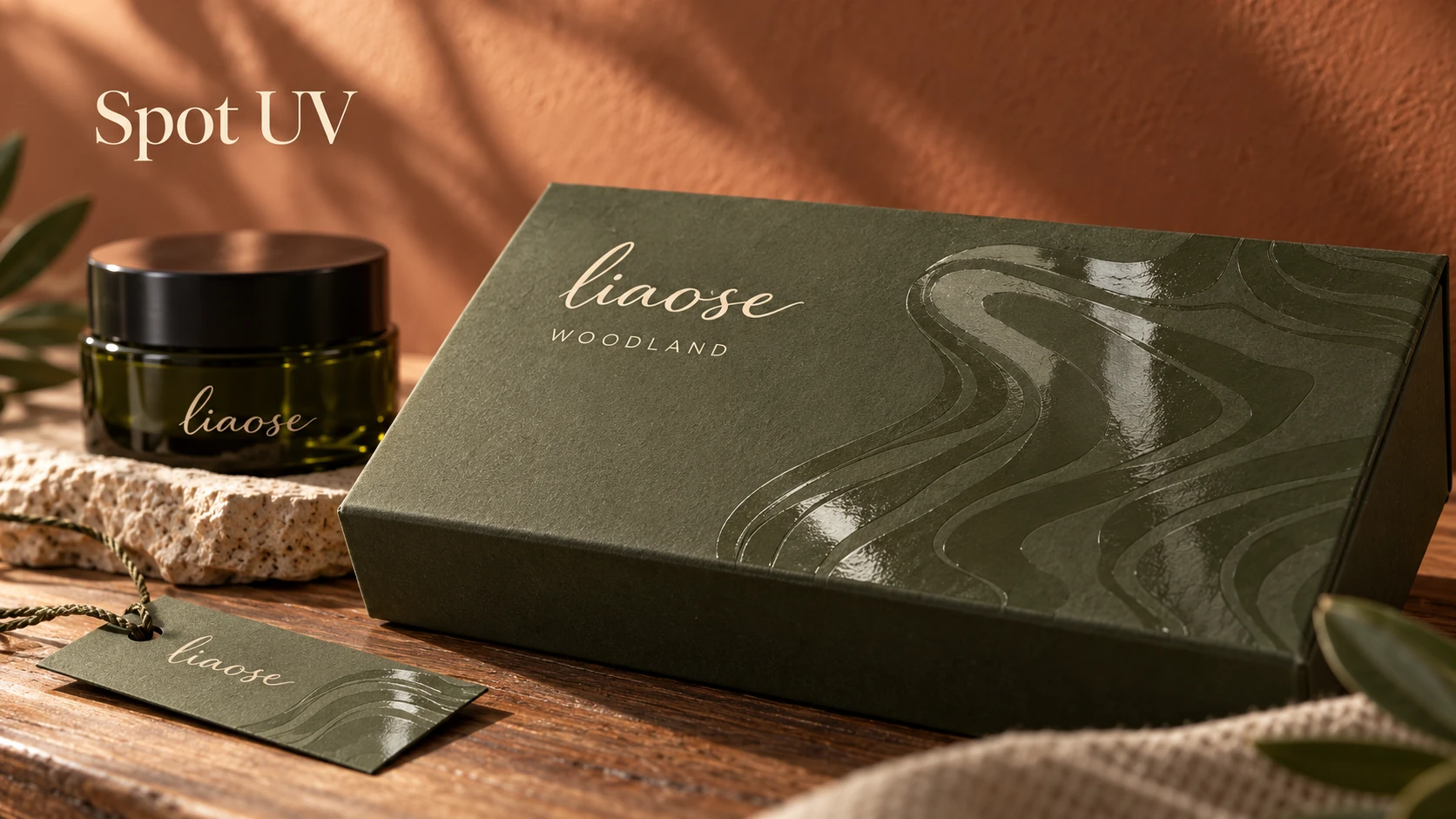
Spot UV
Selected gloss contrasts with the surrounding matte surface.
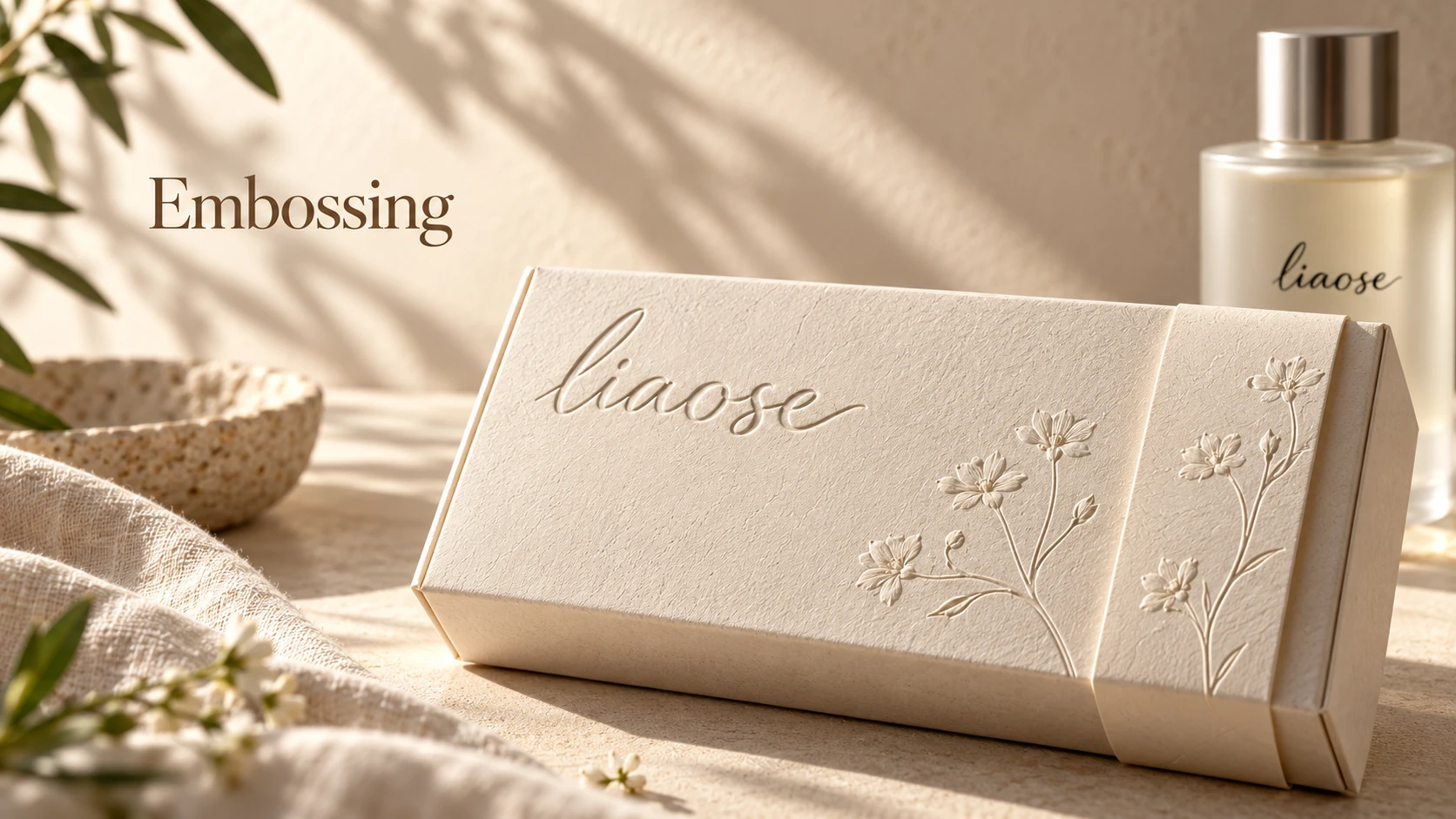
Embossing
Raised paper details create visible and tactile relief.
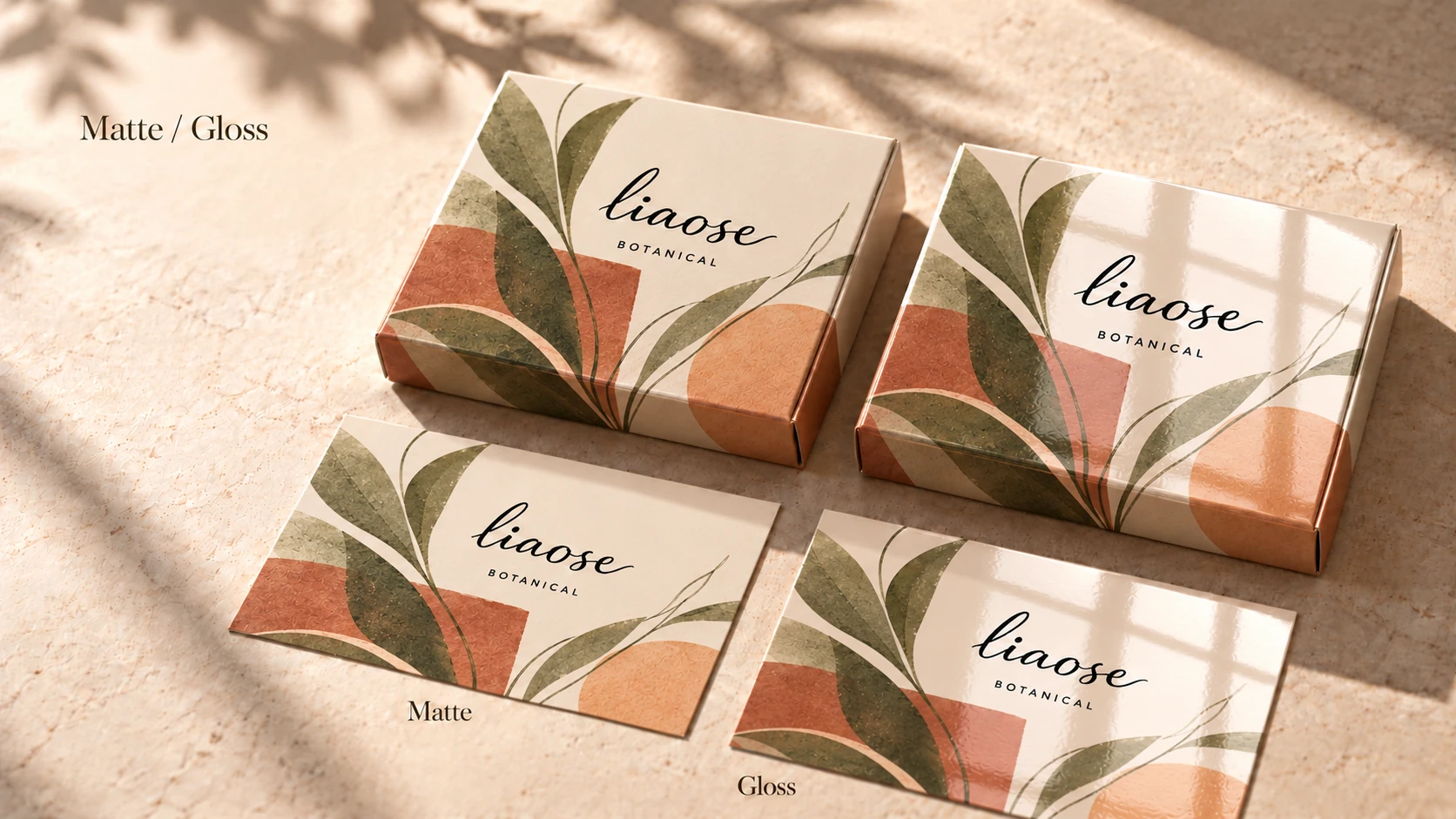
Matte & gloss
Film lamination changes surface appearance and feel.
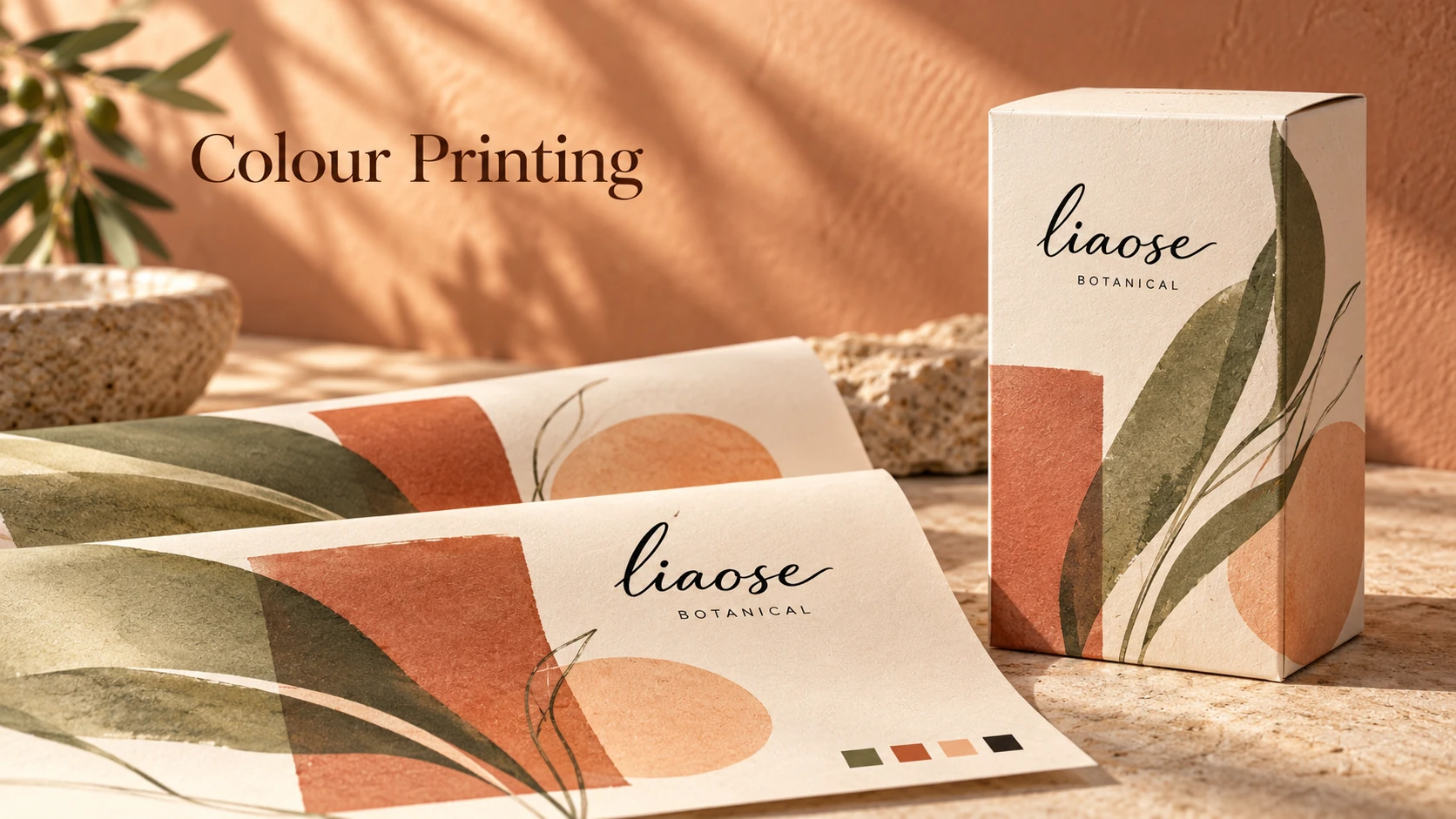
Colour printing
Ink choice and halftone reproduction shape colour and tonal transitions.
Finishes are reviewed through specifications and samples; visual references do not confirm a production process.
04 / CARTON & PRESENTATION
Beyond the container.
A complete presentation.
Secondary packaging brings structure, artwork and protection into the same conversation.
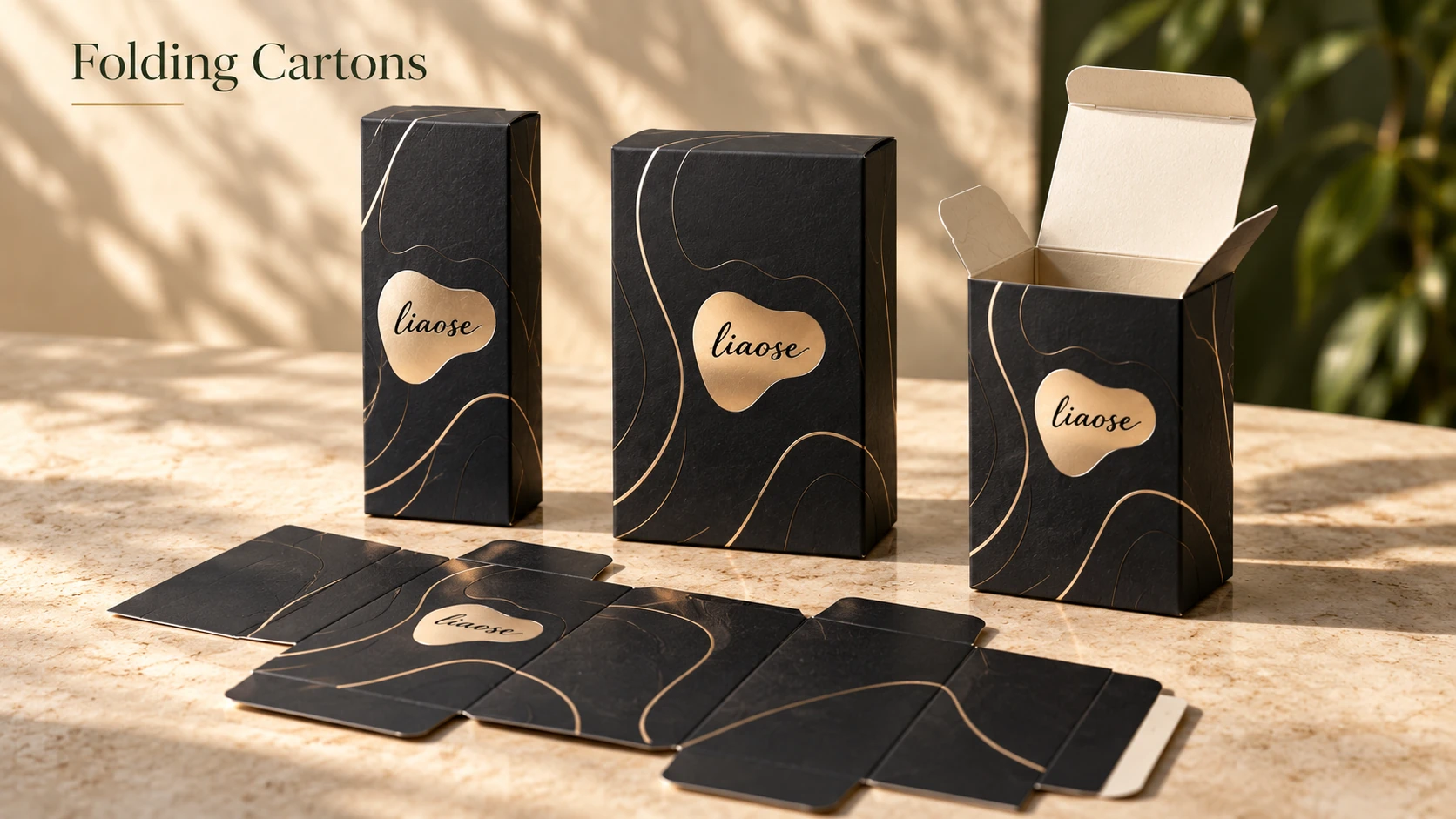
Folding cartons
Cut, creased and folded paperboard. Structure, print registration and decoration are reviewed together.
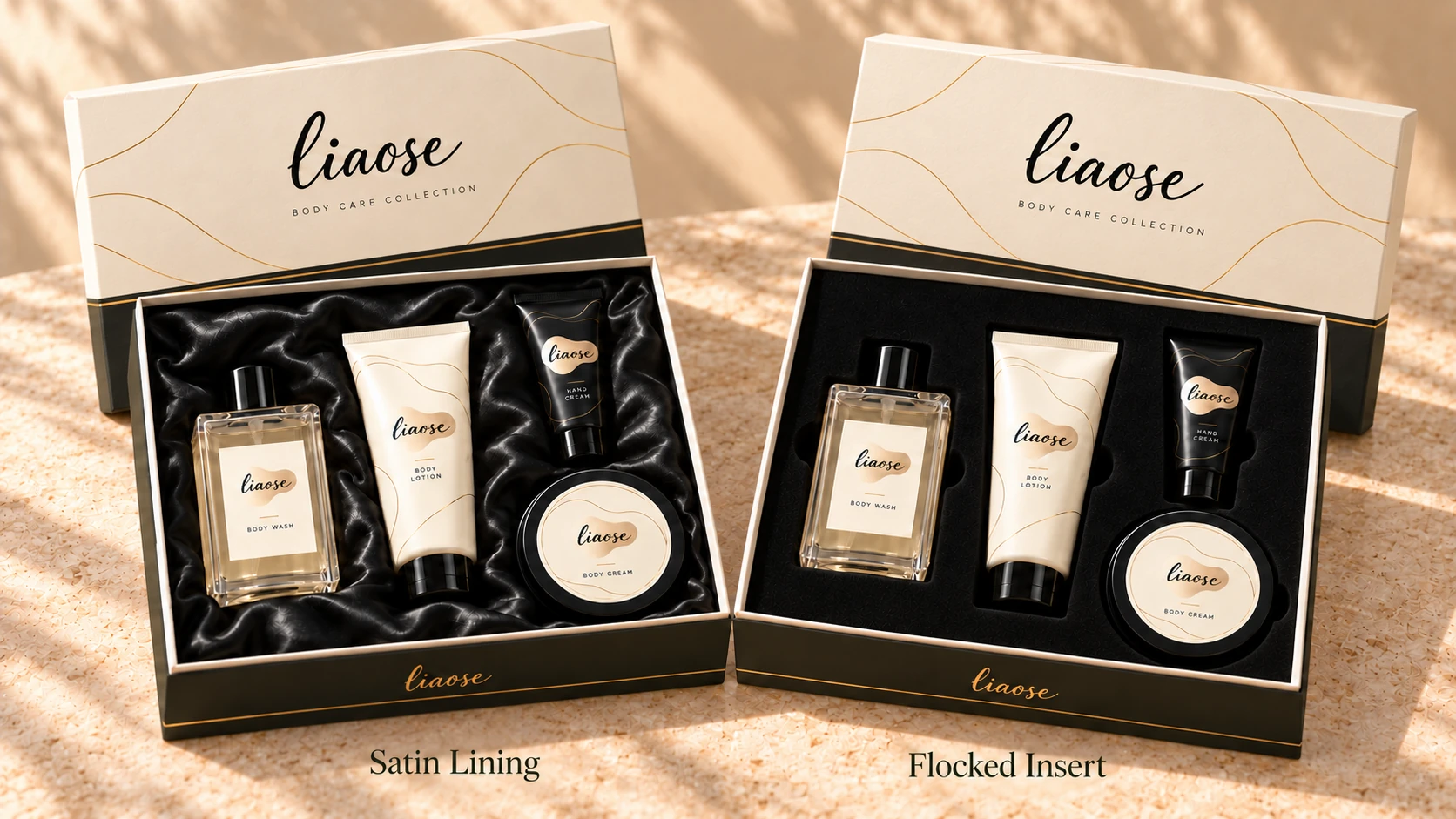
Gift boxes & inserts
Firm board construction with fitted inserts. Material, fit and protection follow the intended contents.
05 / PROJECT CONFIRMATION
From visual direction
to a reviewed specification.
Connect the visual choices with the formulation, components and project requirements before production confirmation.
01
Product Requirement
02
Packaging Direction
03
Component Selection
04
Sample / Compatibility Review
05
Artwork & Presentation
06
Production Confirmation
Compatibility
Formula × Packaging
Function
Dispensing × Sealing × Closure
Presentation
Color × Decoration × Secondary Packaging
Production Readiness
Specification confirmation before manufacturing
Buyer questions
Before you request a quote
How long does packaging procurement take?
Packaging sourcing usually takes 10–25 days; custom packaging is confirmed per project.
Which packaging elements can be customized?
Packaging design, material, shape and process, labels and printing, and outer box design can all be customized.
Do you offer sustainable or PCR (Post-Consumer Recycled) packaging options?
Yes. We supply PCR plastic tubes and bottles (30%–100% recycled content), refillable jar systems, FSC-certified paper cartons, and recyclable glass containers to meet EU and North American sustainability standards.
How do you test formula and packaging compatibility before bulk production?
Every project undergoes in-house compatibility, leakage, vacuum, and pump-output testing (across elevated temperatures and centrifuge checks) during the sampling stage to ensure the formula never reacts with the container or closure.
BUILD THE PACKAGING AROUND YOUR PRODUCT
Bring your direction.
Let’s connect the details.
Share your product, target market and known packaging requirements to begin a focused discussion.
Share your product or packaging brief Start a Product Brief