Choose packaging with the formula experience.
The most useful packaging question is not “which bottle looks premium?” It is “how should this product be contained, dispensed, handled and presented?” Begin with the formula experience, then develop the component and decoration as one specification.
1. Begin with use and dispensing.
A liquid serum, a rinse-off gel and a rich cream place different demands on a package. Describe the flow, intended amount per use, application area and setting. Think about whether the buyer will use it with wet hands, carry it during travel or keep it beside a basin. These details give a component supplier a more useful starting point than a mood board alone.
| Direction | Questions for the actual sample |
|---|---|
| Dropper | Can the formula be drawn up and released comfortably? What are the bulb, pipette and closure materials? |
| Pump / airless | Does it prime and dispense consistently with this formula? What is the product-contact pathway? |
| Tube | Is squeeze and recovery suitable? Does the selected opening deliver the intended amount? |
| Jar | Is access appropriate for the routine? Which liner, inner cover and closure form the complete system? |
These are starting questions, not automatic assignments. A product called a serum does not have to use a dropper, and the word “airless” does not by itself establish compatibility or a shelf life. Test the proposed configuration.
2. Describe the complete component.
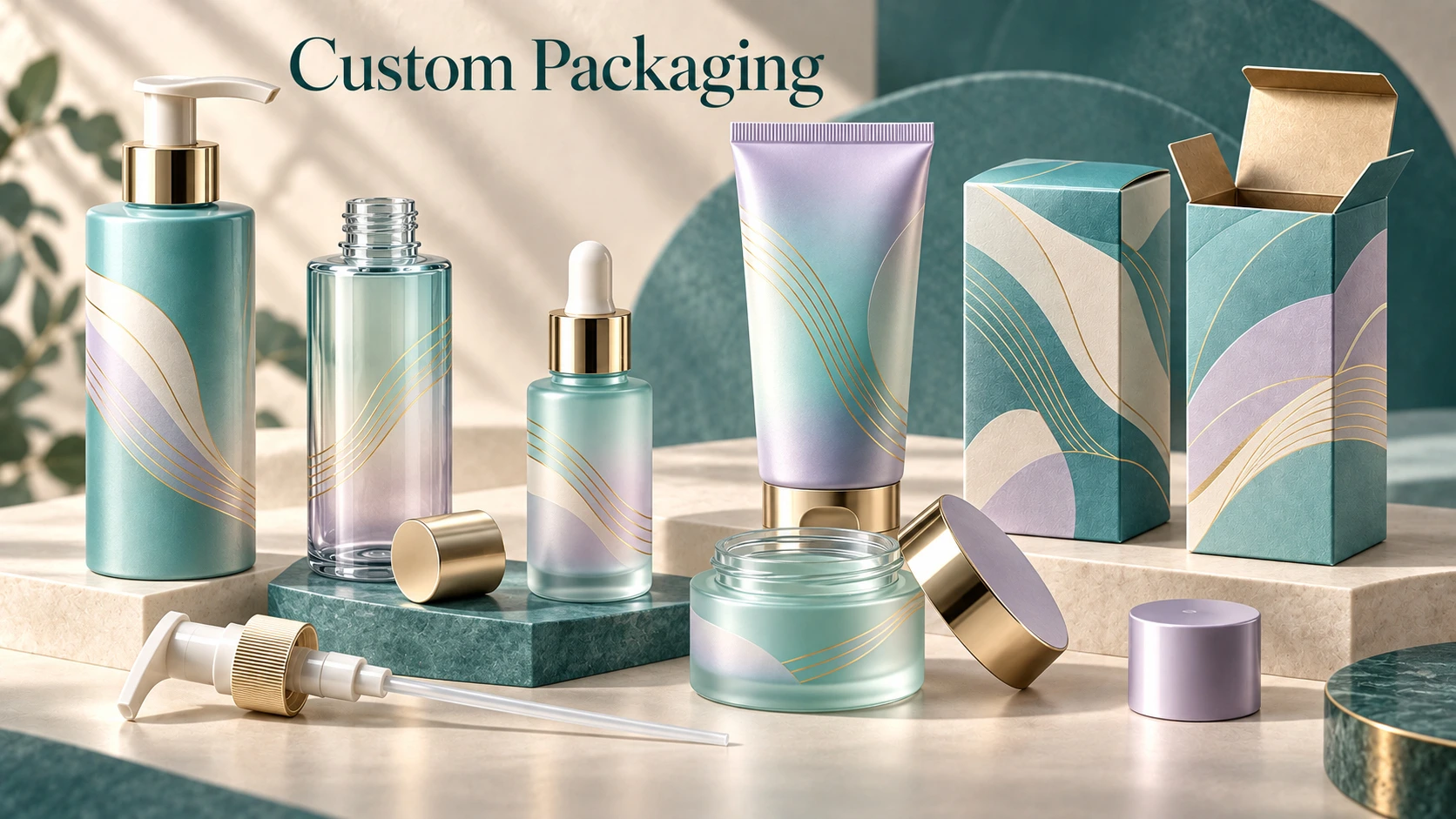
The material of the visible outer bottle may differ from the material that touches the formula. Specify the bottle or inner container, cap, liner, pump pathway or dropper parts separately. For a double-wall jar, distinguish the inner container from the decorative outer shell.
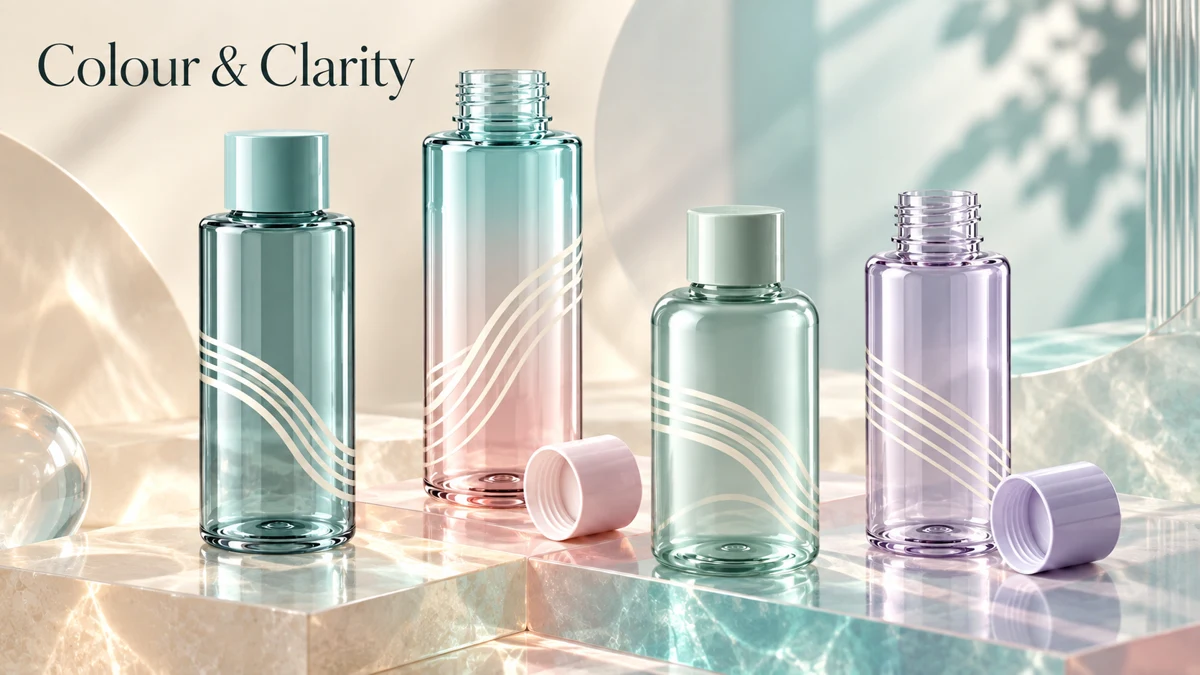
Colour, surface coating and base material are separate decisions. A frosted appearance does not prove that the substrate is glass; a metallic appearance does not prove that a component is metal. Request component information and a physical reference so the approved visual direction can be translated into a verifiable specification.
3. Review the formula–packaging combination.
Cosmetics Europe’s packaging advisory document describes material information as an input to assessment of the finished product. Stability guidance also considers the formula and container together. For purchasing, the practical implication is to keep material documents, the formula reference and the component version connected.
Ask what will be reviewed for this project: dispensing performance, leakage, closure fit, appearance changes or other relevant compatibility considerations. The technical team should determine the actual protocol and acceptance criteria. A component photo or an attractive filled mock-up cannot replace that decision.
- Component reference, dimensions and intended fill size.
- Materials and product-contact parts.
- Closure, sealing and dispensing configuration.
- Relevant checks, acceptance criteria and approval owner.
4. Add decoration and the secondary pack.
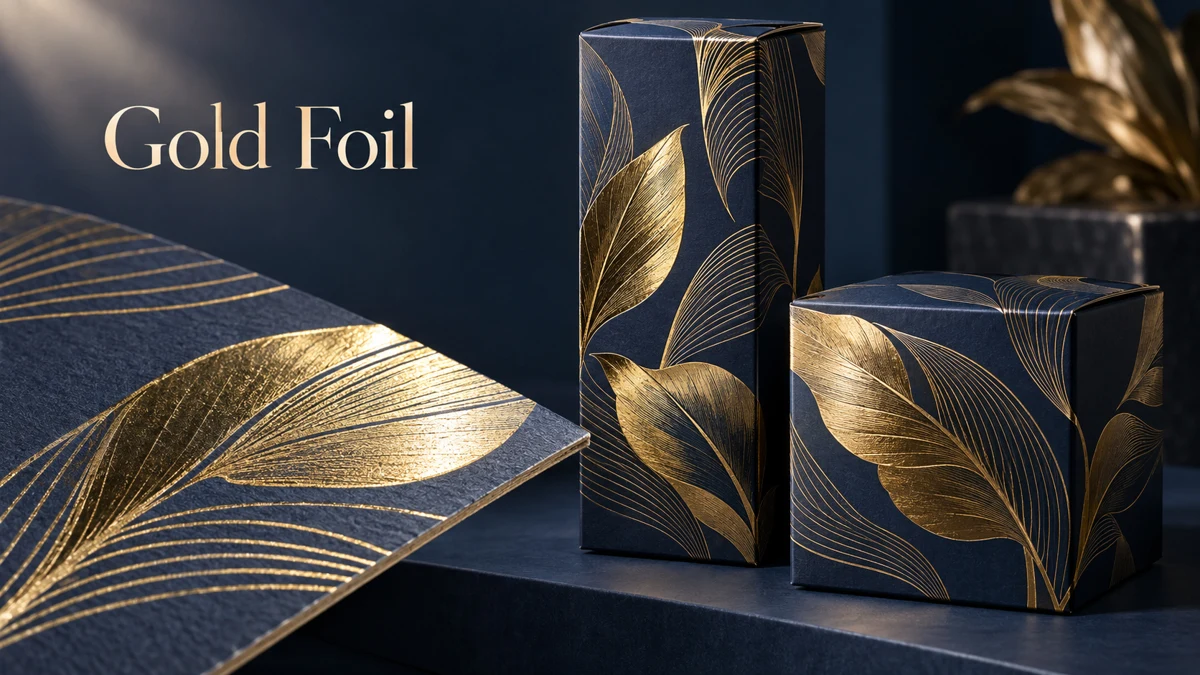
Choose a carton or gift-box structure after the product dimensions and set arrangement are clear. Then define the paper, printing colours, foil or relief details and protective finish. Keep an artwork approval separate from approval of the structure and fit.
Use a restrained hierarchy: product identity first, useful information second, decorative details third. A physical printed proof can reveal issues that are difficult to judge on a screen, including small text, fold positions and the relationship between foil and printed graphics.
Sources & further reading
Practical examples and checklists are editorial guidance. The references below support the technical background and company information.
- Cosmetics Europe — Packaging Advisory Document (2019)
Background on exchanging packaging material information for assessment.
- Cosmetics Europe / CTFA — Guidelines on Stability Testing of Cosmetics (2004)
Background on stability studies and the formula–container combination.