Inside Yuanze’s path from brief to manufacturing.
A cosmetic project moves through connected decisions. Yuanze’s published workflow links the product brief, formula and packaging development, sampling, testing, documentation and preparation with production and quality release.
1. Turn the idea into reviewable inputs.
The Yuanze factory catalog presents skin care, body care, hair care and makeup as product groups, with formula development, packaging design and production as connected areas of work. A useful inquiry narrows that broad introduction to an actual format: a facial serum, a body-care emulsion or a shampoo direction, for example.
The published development process begins with a product brief and feasibility review. Formula and packaging development then progress into sampling, stability and compatibility testing, documentation and design review, production preparation, and production and quality release.
For the brand, each stage should leave a clear decision or recorded input. A sensory direction helps frame the sample review; a selected component gives the packaging discussion an actual reference. Ask which deliverables and approvals apply to your project rather than treating the general workflow as a fixed package of services.
2. Bring the approved inputs together.
Before manufacturing preparation, connect the accepted sample direction, component specification, artwork and relevant review requirements. An approval on one part of the product should not conceal an unresolved decision elsewhere.
The supplied cross-department workflow shows separate formulation, packaging, design and documentation reviews. It includes packaging structure and production-fit review, followed by the confirmed inputs required for preparation. For a customer, the useful point is to identify each approval and its owner instead of treating development as one undifferentiated step.
| Input | Question for the handoff |
|---|---|
| Product reference | Which sample and specification have been approved? |
| Packaging | Which container, dispensing parts and closure are intended? |
| Artwork | Which file version and printed presentation have been reviewed? |
| Quality requirements | Which checks, records and release decisions apply? |
| Commercial scope | Which quantity, schedule assumptions and deliverables are agreed? |
3. Follow the manufacturing sequence.
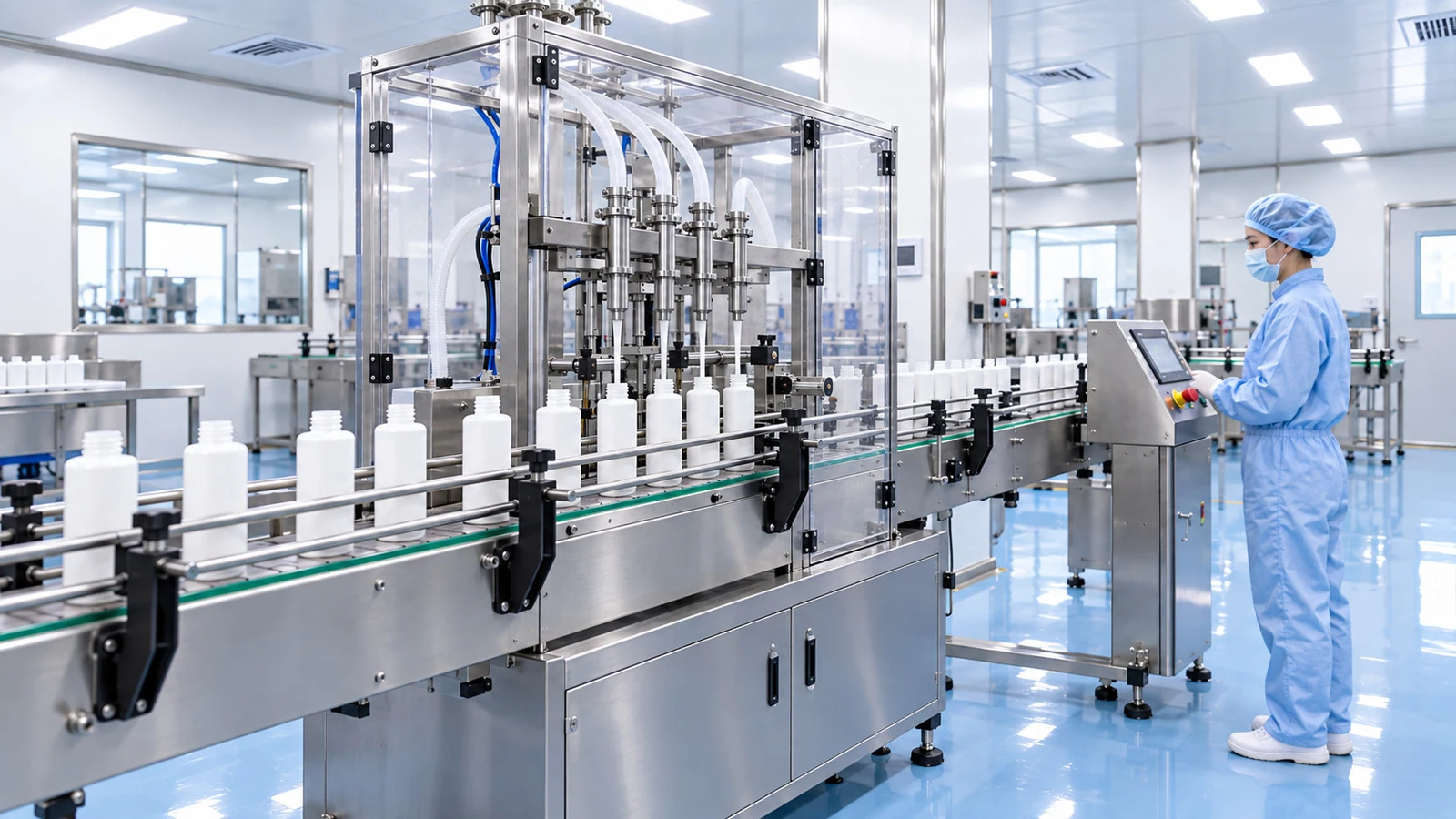
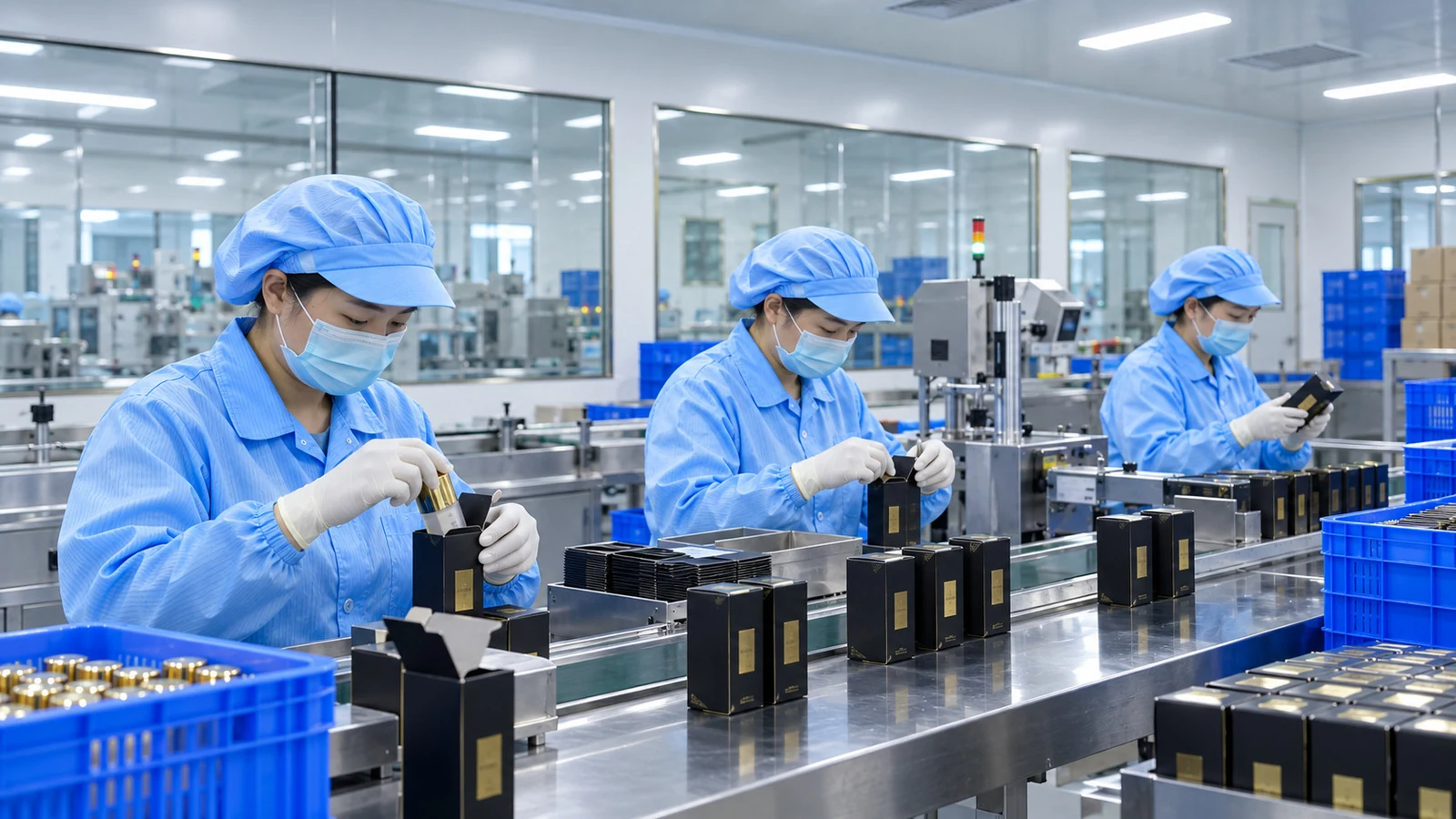
Yuanze’s published production process covers packaging-material receiving and material verification, cleaning and disinfection, bulk preparation and inspection, filling and capping, coding and labeling, secondary packaging and carton packing, and line clearance.
This sequence explains why a manufacturing conversation needs more than a bottle image. Material specifications, handling, identification and packaging information all connect with the product being prepared. The exact controls and records for a project depend on its agreed specification.
The supplied workshop process sheet also identifies practical checks: components should match the production instruction, sets should be complete, filling should match the specified amount, and coding and labels should be consistent with the product. These checkpoints connect the approved specification with what is packed on the line.

4. Read the quality information in context.
The current published quality-control process covers before-production review, materials and bulk inspection, during-production controls and nonconformity handling. The laboratory information lists physicochemical work such as pH and viscosity measurements, alongside microbiological and environmental monitoring.
A listed laboratory activity does not establish a result for every product. Ask which tests and supporting records apply to the proposed formula. Likewise, the ISO 22716 and GMP assessment information should be read with its named site, standard and certificate scope on the Quality Control page.
- Review the relevant development stage.
- Identify the inputs still awaiting approval.
- Confirm project-specific checks and documents.
- Agree the manufacturing handoff and release responsibilities.
This article explains the workflow already published by Yuanze. It does not describe a named customer project or add a production capacity, lead-time or performance claim.
Sources & further reading
Practical examples and checklists are editorial guidance. The references below support the technical background and company information.
- Yuanze — Product Development
Yuanze’s published cross-functional development workflow.
- Yuanze — Manufacturing
The manufacturing stages already published on this website.
- Yuanze — Quality Control
The published laboratory activities, quality checkpoints and assessment scope.
Company sources: Yuanze Cosmetics Factory Catalog, Cross-department New Product Development Flowchart, Workshop Production Process Sheet and Laboratory Testing Project List. This article summarises customer-relevant stages and omits internal personnel, costs and supplier details.