Serum, lotion or cream: how to brief the texture.
“Lightweight” and “rich” are useful starting words, but they leave room for interpretation. A better cosmetic texture brief describes the experience in stages: dispensing, first contact, spreading and the finish after application.
Understand structure, appearance and sensory language.
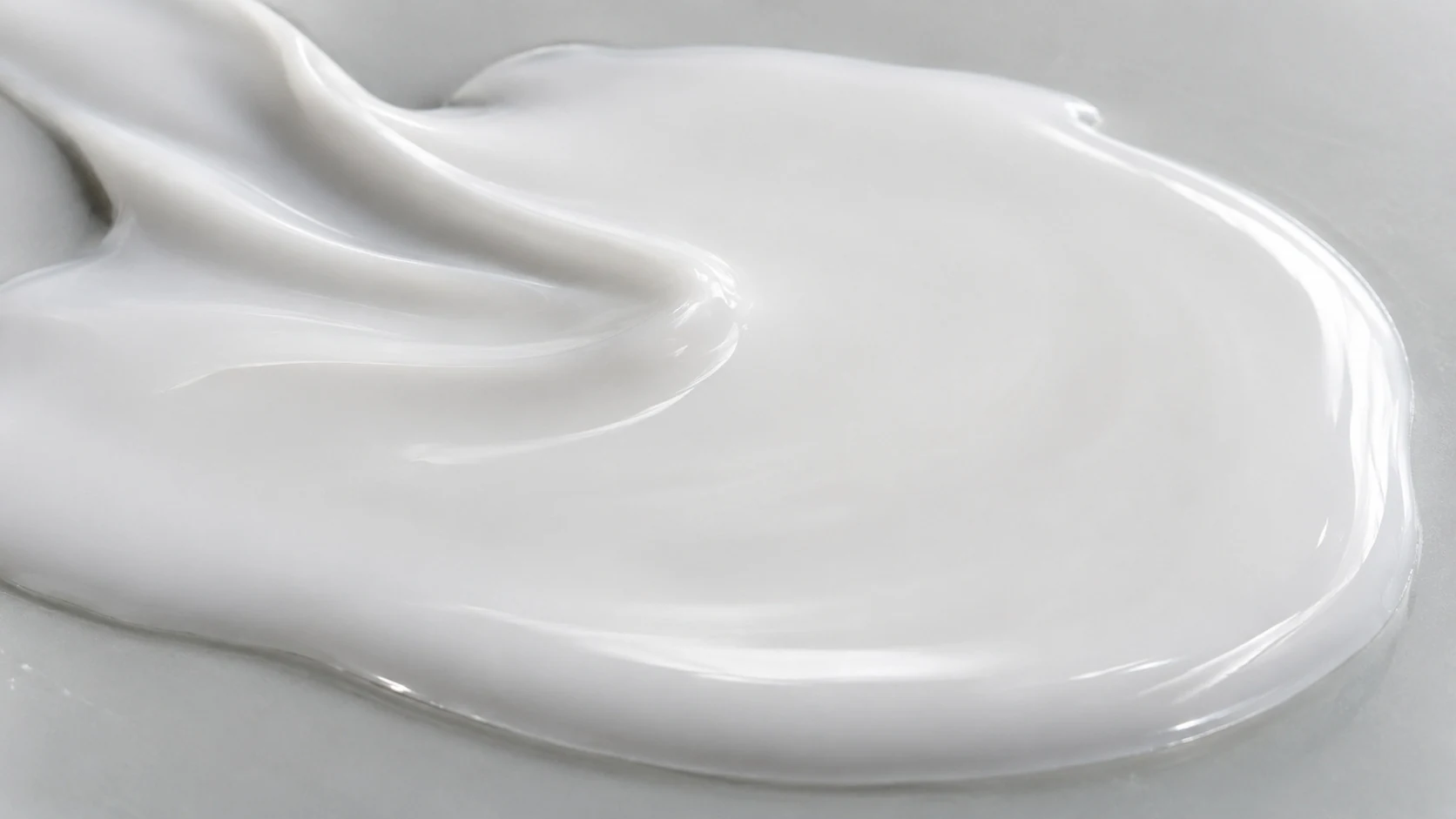
The cosmetic bulk texture atlas separates three kinds of description: formula structure, visible appearance and commercial texture language. These are not mutually exclusive categories. A cream can contain pigments, and a gel can suspend particles. A clear appearance cannot establish the formula’s composition or a measured viscosity.
| Term | Meaning to discuss |
|---|---|
| Aqueous solution | A water-based solution with dissolved components; colour and flow can vary. |
| Hydrogel | A gel network containing water; transparency is not a defining requirement. |
| Lotion / emulsion | A product format that can describe a relatively fluid emulsified system, without a universal viscosity boundary. |
| Cream / emulsion | A soft semisolid format; its thickness alone does not establish oil content or skin feel. |
| Anhydrous balm | A formulation without added water as its intended base; confirm the actual composition and structure. |
Pearlescence, foam, visible particles, pigment dispersions and suspension are further descriptions of appearance or a system’s behaviour. They are not interchangeable with the five terms above. Use the formulation information and relevant measurements to confirm what the sample actually is.
1. Separate the product name from the experience.
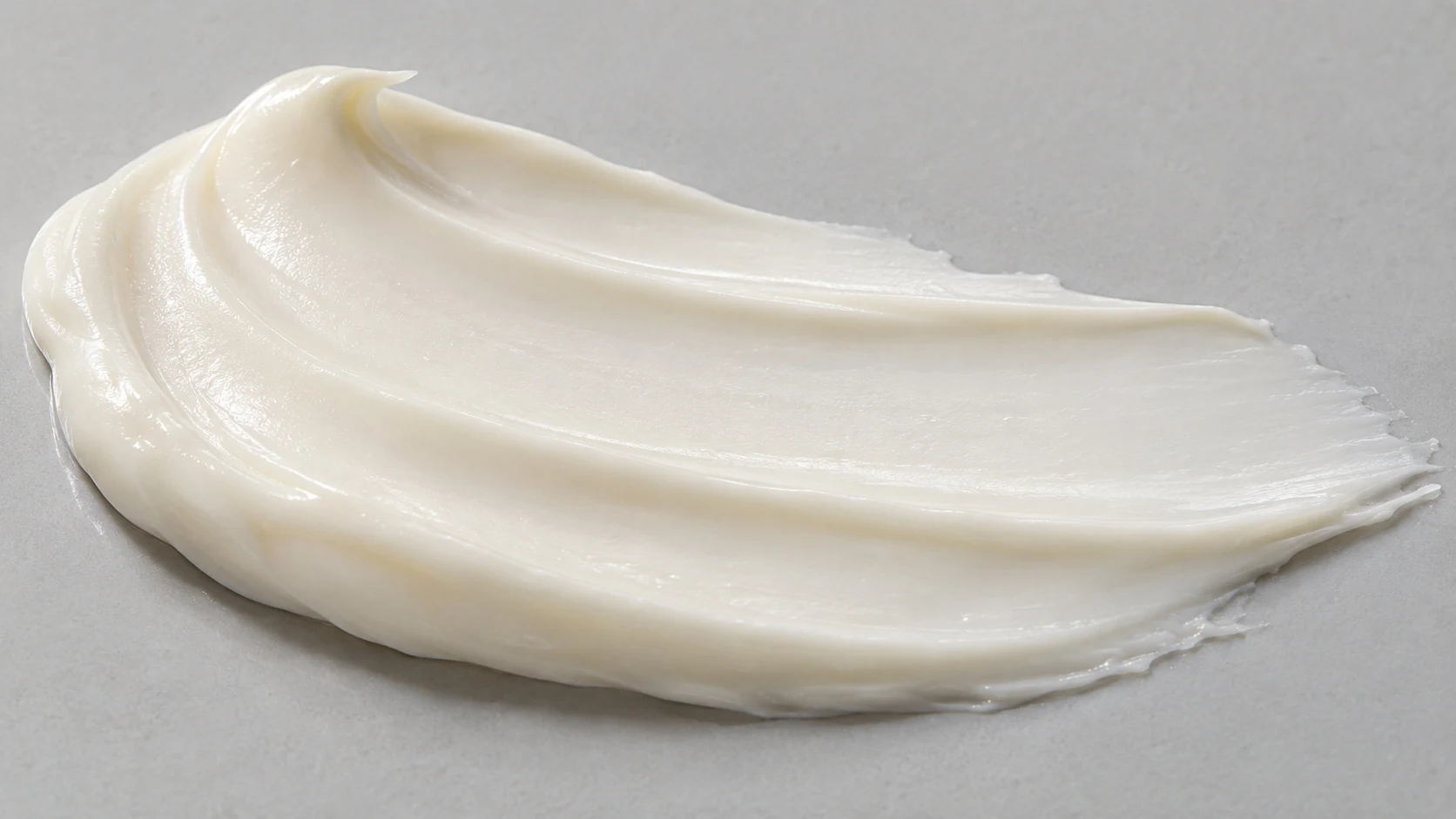
Serum, lotion and cream help buyers understand a routine and presentation. They do not provide a complete specification. Two products with the same format name can feel very different, and a fluid appearance does not reveal an ingredient concentration or prove a particular effect.
Use the format name together with an intended routine. For example, explain that you are considering a leave-on facial step and want a fluid that is easy to control from the selected dispenser. Then discuss the actual formulation options with the development team.
| Starting phrase | More specific direction |
|---|---|
| Lightweight serum | Describe initial flow, spread and the amount of residue you prefer. |
| Rich cream | Describe body in the container, application resistance and the desired finish. |
| Fresh lotion | Explain the handling experience, fragrance direction and routine context. |
| Smooth gel | Describe flow, glide and the feel after application or rinsing. |
2. Review texture in stages.
Begin with dispensing: can the buyer control the amount? Then observe initial contact and spreading. Finally, describe the finish after application using an agreed comparison point. A sample can flow easily from a bottle but feel different once spread; one observation should not stand in for the whole experience.
Keep the evaluation conditions consistent and compare with a labelled reference. Words such as “silky,” “cushioned” or “dry-touch” become more useful when your team agrees what they mean in relation to that reference. Record differences without turning preferences into claims about efficacy.
3. Avoid judging the formula by one ingredient name.
Formulation choices work together. BASF’s sensory discussion illustrates that emulsifier systems can influence formulation aesthetics and skin feel. For a brand brief, the useful question is how the whole proposed formula addresses the experience, rather than assuming one named ingredient will settle the result.
An ingredient declaration serves a different role from a texture brief. Naming requirements depend on the intended market; the FDA, for example, explains US common-or-usual-name requirements. Review the actual declaration and claims with the appropriate team rather than treating a reference ingredient list as a universal label template.
4. Turn the direction into sample criteria.
- The format and intended routine.
- A reference with the features identified.
- Dispensing, spread and finish priorities.
- Requirements versus optional preferences.
- The component direction and decisions still open.
Ask the development team which starting formula or new work could address these criteria. Evaluate the resulting sample against the same brief. Confirm product-specific stability, packaging and other review requirements separately before approval.
Sources & further reading
Practical examples and checklists are editorial guidance. The references below support the technical background and company information.
- BASF Care Creations — Sensorial Experiences
Background on formulation choices and sensory experience.
- FDA — Cosmetic Ingredient Names
US ingredient naming information; this is not a global labeling rule.
- Yuanze — Product Development
Yuanze’s published cross-functional development workflow.
Terminology also draws on Yuanze’s supplied Cosmetic Bulk Textures professional atlas: reading guidance, T01–T12 and terminology notes. The visual reference does not report a measured formula or test result.